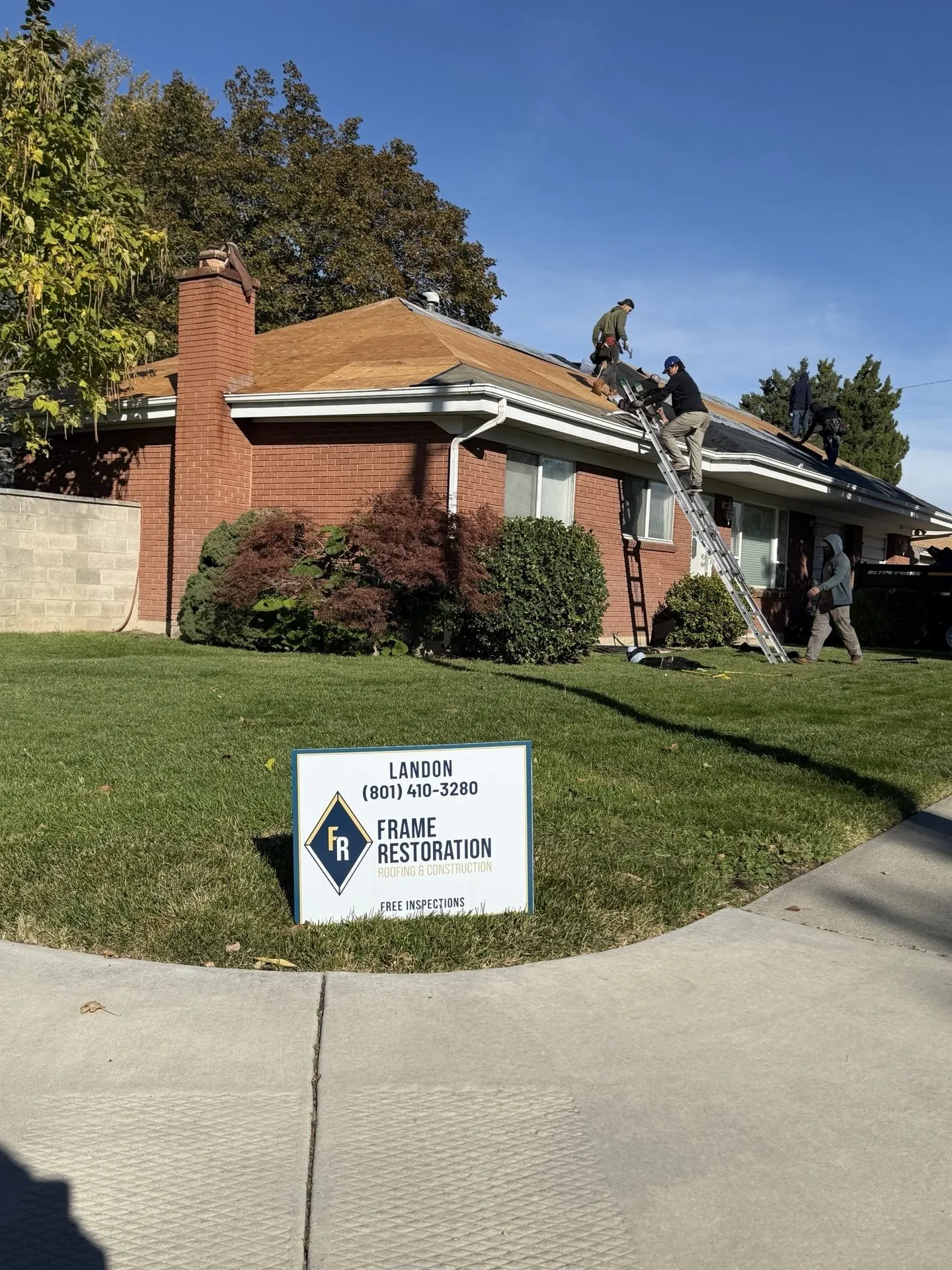
Utah's Wasatch Front and mountain communities see recurring spring and summer hail risk, with storm intensity varying sharply by corridor and elevation. For Utah homeowners, understanding hail-season timing, damage identification, contractor verification, and the roof-condition documentation process helps keep decisions grounded in roof facts instead of door-knocker pressure.
When Is Hail Season in Utah?
Utah's hail season runs primarily from May through September, with peak activity concentrated in June and July when afternoon thunderstorms build along the Wasatch Mountains and push across the valley floors. The mechanism is consistent: intense solar heating drives moisture up the mountain slopes, creating cumulonimbus clouds that produce hail as updrafts suspend water droplets at freezing altitudes long enough to form ice.
The highest-risk areas are the communities directly west of the Wasatch range — Sandy, Draper, West Jordan, Riverton, Herriman, Lehi, and South Jordan see the most frequent hail events. Northern Utah communities including Layton, Bountiful, and Ogden experience a secondary peak in late July and August. Mountain communities like Park City and Heber City can experience hail events into October, though these are typically smaller in size.
How Hail Damages Your Roof
Hail damage to asphalt shingle roofs occurs through three primary mechanisms. First, impact can dislodge the ceramic granule coating that protects asphalt from UV degradation — a common form of damage that is often hard to see from the ground. Second, larger hailstones can bruise or fracture the fiberglass mat underneath the granules. Third, severe storms can damage shingles, flashing, ridge caps, vents, and other roof accessories.
Utah elevation also changes the inspection context. Wasatch Front communities commonly sit around 4,200 to 6,000 feet, and mountain communities such as Park City and Heber City sit higher. Roof age, sun exposure, product type, storm angle, and existing brittleness all affect whether a hail event produces repairable damage, replacement-level damage, or no functional roof issue.
How to Identify Hail Damage on Your Roof
After a hailstorm, check these indicators from the ground before calling a professional. Look at your gutters and downspouts — dents in aluminum gutters are a reliable indicator that hail was large enough to damage shingles. Check any exposed metal surfaces like mailboxes, AC units, and car hoods for impact marks. Examine window screens for tears or dents. If you see damage to these "soft metals," your roof almost certainly sustained damage as well.
On the roof itself, which should only be inspected by a qualified professional, hail damage may show as random dark spots where granules have been knocked loose, bruised areas in the shingle mat, cracked shingles, and dented flashing around chimneys and vents. Pattern matters: hail indicators are usually random and scattered, while wind damage often concentrates along edges, ridges, rakes, or exposed planes.
The storm-damage documentation process for Hail Damage in Utah
Documenting hail damage in Utah follows a specific sequence, and the outcome depends on your policy, roof condition, storm evidence, and carrier findings. Here is the process Frame Restoration Utah guides homeowners through when hail damage needs a written record.
First, document the storm event with date, approximate time, and any photos of hail on the ground or damage to vehicles and property. Second, review your policy and contact your carrier if you decide to request carrier review. Third, schedule a professional roof inspection with a licensed contractor who can identify roof conditions that are not visible from ground level. Fourth, keep the contractor's photo report and construction scope with your homeowner records so the roof condition is clear during review.
Carrier outcomes depend on policy terms, cause of loss, exclusions, roof condition, and carrier findings. Some policies have separate wind/hail required out-of-pocket amounts that may be higher; check your declarations page before assuming what a carrier review will do.
Protecting Your Roof Before Hail Season
The most effective protection against hail damage is material selection during your next roof replacement. Class 4 impact-resistant shingles (such as CertainTeed Landmark IR, Owens Corning Duration FLEX, or GAF Timberline AS II) are tested for severe impact resistance under UL 2218-style impact standards. Some carriers may offer discounts for qualifying products, but discounts are not automatic and vary by policy, carrier, product, and documentation. Confirm with your carrier before treating a Class 4 upgrade as a financial payback item.
Beyond material selection, confirm your roof has proper ventilation, flashing is intact, and gutters are securely fastened. Ventilation defects can add thermal stress that weakens shingles before storm season. Trim overhanging tree branches that could break under hail impact and cause secondary damage to the roof surface.
Storm Chasers vs. Local Contractors: Protecting Yourself
After every major hailstorm along the Wasatch Front, out-of-state "storm chaser" roofing companies flood into Utah neighborhoods with door-to-door sales tactics. While not all are bad, the pattern is well-documented: they offer aggressive sign-up incentives, complete the work quickly with traveling crews, and leave the area before warranty issues surface.
Before hiring any contractor for hail damage repairs, verify their Utah DOPL contractor license at dopl.utah.gov, confirm they carry Utah workers' compensation and general liability insurance, check for a physical Utah business address (not just a P.O. box), ask for local references from the past 12 months, and verify they will be available for warranty service in subsequent years. A local contractor like Frame Restoration Utah has a permanent presence, a reputation to maintain, and a license that Utah DOPL can hold accountable.
What to Do After a Hailstorm
When a significant hailstorm hits your area, act within the first 48 hours. Document visible damage to your property with photos and video. Check soft metals such as gutters, vents, and mailbox covers for impact marks; fresh dents are a reason to schedule a closer roof inspection, not proof of a specific policy outcome. Do not sign contracts with door-to-door solicitors in the immediate aftermath of a storm. Verify credentials and get at least one local, written opinion.
Frame Restoration Utah provides post-storm inspections across 40+ Utah communities, prepares roof-condition documentation and written construction scopes, and backs repairs with a 10-year workmanship warranty. Call 435-292-8802 or schedule your inspection online.
Utah Hail Evidence Checks We Verify
For hail inspections, we keep the recommendation tied to measurable roof evidence and source-backed references.
- 1-inch hail is a practical threshold for closer inspection on vulnerable asphalt roofs, especially when soft metals show fresh dents.
- 2-inch steel-ball Class 4 is the controlled UL 2218-style impact reference commonly cited by manufacturers; it does not guarantee hail immunity.
- 48-hour documentation is the homeowner target for storm dates, ground photos, vehicle/soft-metal photos, and interior water-entry photos.
- 40+ Utah communities are covered by Frame Restoration Utah's inspection footprint across the Wasatch Front and Heber Valley service area.
- R806.2 ventilation and R905.1.2 ice barriers are checked when hail repair expands into replacement, deck work, or roof-assembly corrections.
Sources & References
- National Weather Service — Salt Lake City Climate Book — Utah weather and storm context
- National Roofing Contractors Association (NRCA) — Hail damage identification standards
- Utah Division of Professional Licensing (DOPL) — Contractor license verification
- NOAA Storm Prediction Center — Historical hail event data
- GAF — Class 4 Impact-Resistant Shingles — controlled impact-test context
- IRC R806.2 Attic Ventilation — ventilation reference
- IRC R905.1.2 Ice Barriers — roof-assembly reference