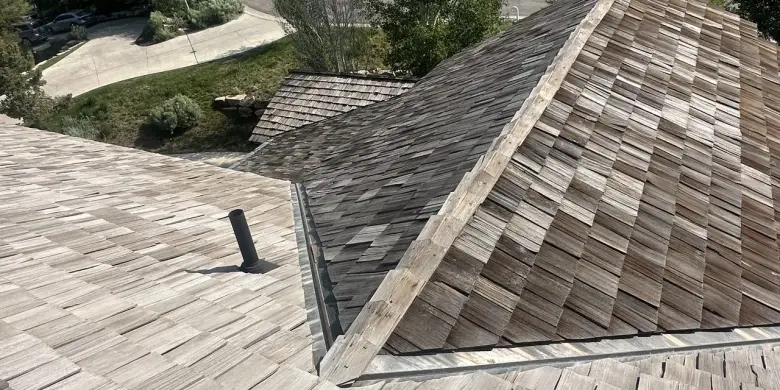
A Utah roof replacement can range from under $8,000 to well over $30,000 in 2026. Using the architectural-shingle tier in this guide, a 2,400 sq ft roof budgets around $12,000 to $19,200 before roof-specific variables like pitch, tear-off layers, access, elevation, and material choice move the number.
This guide walks through every factor that drives the price — and explains why an in-person inspection is the only honest way to land on a real number for your specific roof. A replacement in Sandy on a single-story rambler is a fundamentally different job than a steep-pitch mountain home in Park City, and the bid should reflect that.
Why There's No Single Answer to "How Much?"
Roof replacement pricing has more variables than most homeowners expect. Two houses on the same street can have dramatically different costs. Here's why:
Roof Size (Square Footage)
This is the biggest factor, but it's not as simple as your home's floor plan. Roof area is measured in "squares" (100 square feet each). A 1,500 sq ft home might have 18-22 squares of roof depending on overhangs, pitch, and complexity. Bigger roof = more material, more labor, higher cost. But a 2,000 sq ft home with a simple gable can cost less to roof than a 1,500 sq ft home with multiple valleys, hips, and dormers.
Pitch (Steepness)
Roof pitch is measured as rise over run — a 6/12 pitch rises 6 inches for every 12 inches of horizontal run. Most Utah valley homes sit in the 4/12 to 7/12 range. Once you get above 8/12, labor costs increase because crews need safety harnesses, toe boards, and move slower. Mountain homes in Heber City, Midway, and Park City often have 10/12 or steeper pitches to handle snow loads — and the labor premium is real.
Tear-Off Layers
If your existing roof has one layer of shingles, the tear-off is straightforward. But many older Utah homes — especially in Bountiful, Murray, Salt Lake City, and other established neighborhoods — have two or even three layers stacked up from past "overlay" jobs. Every additional layer adds labor hours and dump fees. Utah building code allows a maximum of two layers, so if you already have two, the full tear-off is mandatory.
Decking Condition
Once shingles come off, your contractor can finally see the plywood decking underneath. Rotted or water-damaged sheets need to be replaced before new shingles go down. There's no way to know the decking condition until the old roof comes off, which is why even the best estimate includes a per-sheet allowance for decking replacement. Homes with chronic ice dams or long-deferred leaks tend to have more decking damage.
Material Choice
This is where homeowner preference meets budget reality:
- 3-tab shingles — the most economical option. Flat appearance, shorter manufacturer warranty, adequate protection. Common on rental properties and budget-conscious projects.
- Architectural (dimensional) shingles — the most popular choice in Utah. Thicker, more wind-resistant, better curb appeal, and longer warranties. This is what most homeowners choose.
- Designer / premium shingles — shake-look, slate-look, or high-definition profiles. Substantially more expensive but dramatically change a home's appearance. Popular in Draper, Holladay, Cottonwood Heights, and mountain communities.
- Standing seam metal — long lifespan, excellent snow shedding, premium price point. Growing fast in Park City, Heber, and Alpine. See our standing seam metal roofing guide for more detail.
- Impact-resistant shingles (Class 4) — rated to withstand hail. May qualify for carrier-specific premium credits where available in hail-prone areas along the Wasatch Front.
Ventilation and Flashing
A proper replacement isn't just shingles. Ridge vents, soffit vents, pipe boots, step flashing, drip edge, and ice-and-water shield in valleys and eaves all factor into the total. Skipping or cheaping out on these components is the #1 reason "cheap" roof jobs fail within 5 years. If a bid seems unusually low, ask exactly what's included.
What Makes Utah Different From National Averages
National roofing cost guides are built on data from places like Texas, Florida, and the Midwest. Utah has conditions those averages don't account for:
Elevation
The Salt Lake Valley sits at roughly 4,200-4,500 feet. Heber City is at 5,600 feet. Park City tops 7,000 feet in places. Higher elevation means more intense UV exposure, faster shingle degradation, heavier snow loads, and more extreme freeze-thaw cycling. Materials rated for these conditions cost more — and should.
Hail Season
Utah's Wasatch Front gets hit with damaging hailstorms every spring and summer. Cities along the east bench — Sandy, Draper, South Jordan, Herriman — are particularly exposed. After a major storm, demand for roofers spikes, which can affect scheduling but shouldn't affect pricing from a reputable contractor. If someone shows up uninvited after a storm and pressures you to sign immediately, that's a red flag.
Snow Load Requirements
Mountain communities have stricter snow load requirements in the building code. This can affect underlayment, fastener patterns, and structural requirements. A roof built to valley specs won't pass inspection in Heber or Park City — and shouldn't, because the snow loads are genuinely different.
Desert-to-Alpine Climate Swings
Utah homes experience temperature swings of 60+ degrees between summer and winter, and sometimes 40 degrees in a single day during spring. This thermal cycling is brutal on roofing materials. Products need to be rated for it, and installation practices (nail patterns, sealant strips, underlayment overlap) need to account for expansion and contraction.
the carrier Factor
Here's something most cost guides don't emphasize enough: carrier review can materially change a roof replacement budget when a specific storm event caused the damage. If your roof was damaged by hail, wind, or a fallen tree, coverage depends on policy terms, cause of loss, exclusions, and carrier findings.
The catch is that you need to know whether your damage is storm-related or age-related before you open a roof claim file. opening a roof claim file for an age-worn roof wastes everyone's time and can affect your policy. A qualified contractor should inspect your roof and tell you honestly which category your damage falls into — before you call your carrier.
If the damage is storm-related, a good contractor will document everything for carrier review, coordinate the inspection, and make sure the scope of work reflects the actual damage. See our storm-damage documentation page for how this process works.
The Bottom Line on Insurance
Don't assume you're paying out of pocket until a professional has looked at your roof. And don't let anyone pressure you into opening a roof claim file before they've done a thorough inspection. Both of those mistakes cost Utah homeowners money.
Why Online Calculators Get It Wrong
Every online roof cost calculator works the same way: you enter your zip code and approximate square footage, and it spits out a range. Here's what those tools can't see:
- How many layers of shingles are already on your roof
- Whether the decking underneath is damaged
- Your roof's actual pitch (Google Earth doesn't measure this accurately)
- The condition of your flashing, vents, and penetrations
- Whether your attic ventilation meets code
- Access challenges (steep driveway, landscaping, power lines)
- Local code requirements for your specific municipality
That's why a calculator might say "$10,000-$14,000" and your actual bids come in at $18,000. The calculator wasn't wrong — it just didn't have enough information to be right. Treat online estimates as loose starting points, not budgets.
How to Compare Bids Without Getting Burned
When you're getting quotes from contractors, here's what to look for beyond the bottom-line number:
Scope of Work
The bid should specify: full tear-off or overlay, underlayment type (synthetic vs. felt), ice-and-water shield in valleys and eaves, drip edge, flashing replacement, ridge vent installation, pipe boot replacement, and cleanup/haul-away. If a bid just says "replace roof — $X" with no detail, that's not a bid — it's a guess.
Material Specifications
What brand and product line? What warranty tier? "Architectural shingles" covers a massive range from builder-grade to premium. Ask for the specific product name so you can compare apples to apples.
Warranty Structure
There are two warranties on every roof job: the manufacturer's material warranty (covers defective shingles) and the contractor's workmanship warranty (covers installation errors). Both matter. A 50-year shingle warranty means nothing if the installation fails in year 3 and the contractor's workmanship warranty was only 1 year — or if the contractor has gone out of business.
Licensing and Insurance
Utah requires roofing contractors to be licensed through DOPL (Division of Professional Licensing). Verify your contractor's license at dopl.utah.gov. Also confirm they carry general liability insurance and workers' comp. If a worker gets hurt on your property and the contractor doesn't have workers' comp, you could be liable.
The Suspiciously Low Bid
If one bid is 30-40% lower than the others, something is being left out. Common shortcuts: skipping tear-off (overlaying), using thinner underlayment, not replacing flashing, omitting ice-and-water shield, or subcontracting to unlicensed labor. The cheapest roof is almost never the cheapest roof over 10 years.
When to Replace vs. Repair
Not every roof issue requires a full replacement. Here's a general framework:
- Repair — isolated leak from a failed pipe boot, a few blown-off shingles after a storm, minor flashing issue. If the rest of the roof has years of life left, a targeted repair makes sense.
- Replace — widespread granule loss, multiple active leaks, shingles curling or cracking across the roof, age beyond manufacturer's expected life (typically 20-30 years for architectural shingles in Utah), or significant storm damage across most of the roof surface.
- Get an honest opinion — a contractor who wants to earn your trust will tell you when a repair is the right call, even though a replacement is a bigger job. Be cautious of anyone who pushes replacement when the damage is localized.
See our roof repair page for more on when repair makes sense.
The Real Answer: Get Your Roof Inspected
Every section of this guide points to the same conclusion: the only way to know what your roof will cost is to have someone qualified walk it, measure it, assess the condition, and give you a detailed written estimate. Not a ballpark. Not a range from the internet. A real number based on your actual roof.
That's what a free inspection is for. No commitment, no pressure — just an honest assessment of where your roof stands and what it needs. If it needs nothing, we'll tell you that too.
Frequently Asked Questions
How much does a roof replacement cost in Utah in 2026?
There is no single answer. A Utah roof replacement can range from under $8,000 for a small, simple roof to well over $30,000 for a large or complex one. The price depends on your roof's square footage, pitch, number of layers to tear off, the material you choose, and your home's location and elevation. The only way to get a real number is a professional inspection of your specific roof.
Why do online roof cost calculators give different numbers than actual bids?
Online calculators use national averages and square footage estimates. They cannot see your roof's actual condition — rotted decking, multiple shingle layers, flashing failures, ventilation issues, or access challenges. A contractor who walks your roof will find things a calculator never can, which is why in-person estimates are consistently different from online tools.
Does insurance cover roof replacement in Utah?
If your roof was damaged by a specific weather event — hail, wind, or a fallen tree — carrier review may apply, but coverage depends on policy terms, cause of loss, exclusions, and carrier findings. Damage from normal aging and wear is commonly treated differently. A qualified roofing contractor can inspect your roof and document whether the damage appears storm-related before you decide whether to open a roof claim file.
Is a roof replacement cheaper in the Salt Lake Valley than in Park City or Heber City?
Generally yes. Mountain communities like Park City, Heber City, and Midway require materials rated for heavier snow loads, higher wind resistance, and extreme freeze-thaw cycling. Steeper pitches common at elevation add labor time and safety equipment costs. Access can also be more difficult. Valley homes tend to have simpler roof lines and standard material requirements.
How long does a roof replacement take in Utah?
Most single-family homes take one to three days. Larger homes, steep pitches, or roofs with multiple layers to tear off can take three to five days. Weather is the main variable — Utah's afternoon storms in spring and summer can push timelines. Your contractor should give you a specific estimate before starting.
Sources & References
- • National Roofing Contractors Association (NRCA) — Industry standards for roofing materials, installation practices, and contractor qualifications
- • Utah Division of Professional Licensing (DOPL) — Contractor licensing verification and requirements for S200/S210 classifications
- • National Weather Service — Salt Lake City Office — Utah climate data, hail frequency, and severe weather patterns along the Wasatch Front
- • Utah Residential Building Code (IRC 2021) — Maximum shingle overlay layers, snow load requirements, and roof pitch standards
- • ENERGY STAR Roofing Products — Energy-efficient roofing material ratings and cool roof standards
- • Utah Insurance Department — Homeowners storm-damage documentation filing guidelines and consumer protections