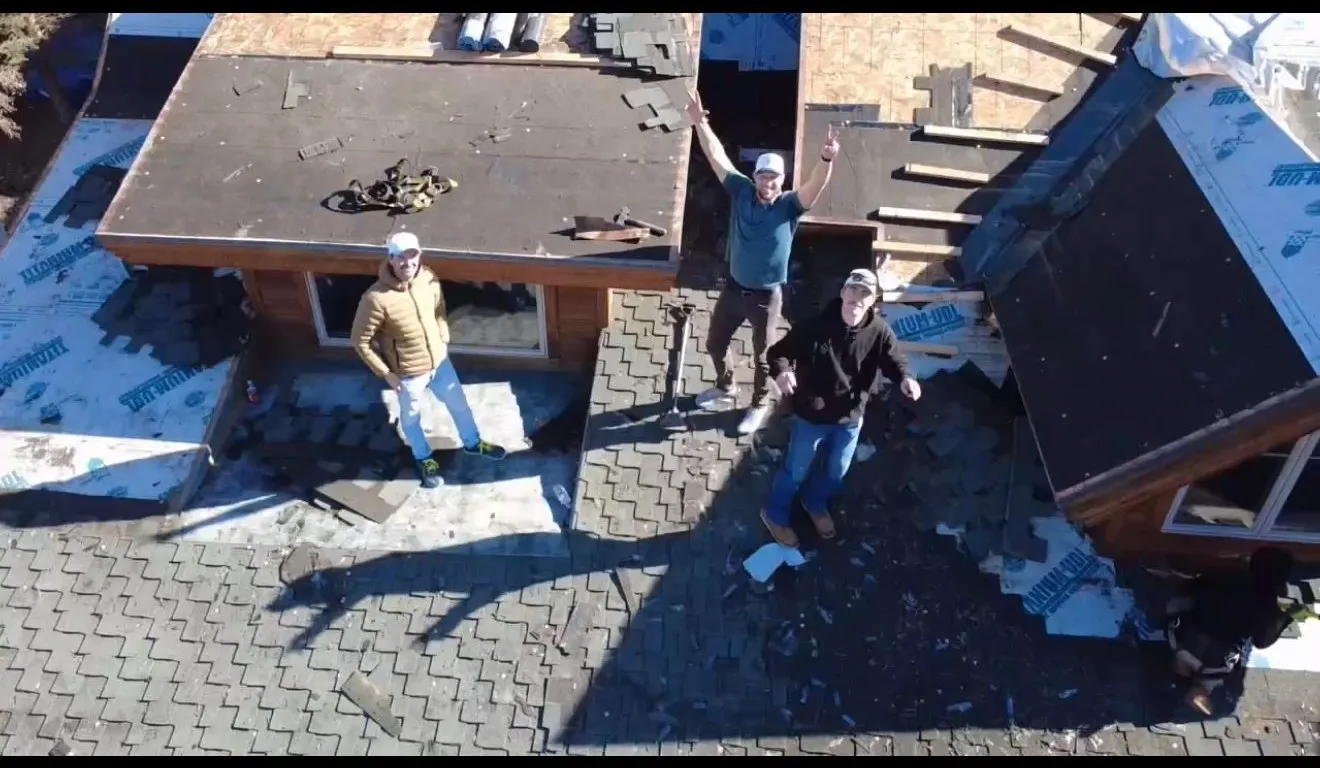
Roofing proposals can look similar while assigning very different work, materials, approvals, payment terms, and closeout responsibilities. Utah homeowners can reduce that ambiguity with public license records and a written, line-by-line comparison.
This guide turns Utah DOPL's contractor, construction-agreement, and home-improvement guidance into nine checks you can apply to every company, including Frame. It is consumer information, not legal or insurance advice.
“Be cautious of requests for large down payments. Payments should be made as work is completed. Never pay in cash.”
Utah DOPL, Home Construction Projects: A Consumer's Guide
9 Things to Check Before Hiring a Utah Roofer
Verify Their Utah DOPL License
Use Utah DOPL's Verify a License tool and search the exact company or license number shown on the proposal. Review the current public record, then compare the company name with the party responsible for the contract. DOPL's Construction Business Registry is a second public identity and contact check. If the classification or scope is unclear, ask DOPL rather than relying on a salesperson's summary.
Confirm Insurance — Both Kinds
Ask for current proof of licensure and insurance tied to the contractor named in the agreement. Utah DOPL's residential construction agreement includes a dedicated proof-of-licensure-and-insurance exhibit and describes general liability and any required workers' compensation coverage. Read the document, confirm the named insured and dates, and ask the issuing source about anything unclear.
Check Recent References and Comparable Work
Utah's home-improvement guidance recommends checking multiple references for each contractor. Ask for recent projects similar in roof type and scope, then ask the reference what was included, how changes were handled, whether the site was closed out as promised, and how the contractor responded to questions. Online reviews can add context, but they do not replace the license record, written scope, or direct references.
Demand a Detailed Written Estimate
DOPL's optional residential construction agreement shows the level of specificity that makes a comparison useful: identify the parties, plans or scope, project price, payment terms, start and completion terms, approvals, permits, change orders, insurance proof, termination, and closeout. For a roof, also record the included roof areas, tear-off or overlay assumption, named materials, flashing and ventilation work, decking allowance, cleanup, disposal, and exclusions.
Understand Both Warranties
Ask the contractor to separate any manufacturer material warranty from the contractor's workmanship warranty. Record the covered work, exclusions, duration, registration responsibility, transfer terms, and the process for requesting service. Compare the written warranty documents rather than a verbal summary.
Ask Who Actually Does the Work
Ask whether employees or subcontractors will perform the work and who supervises the project. Utah DOPL explains that a person working as an independent contractor must be independently licensed when the law requires it; simply saying someone works "under" another license is not enough. Put the responsible contractor and any known subcontracting arrangement in the agreement, and request the applicable license and insurance records.
Verify the Business Identity and Service Path
A storefront, service-area profile, or mailing address alone does not prove who will honor the agreement. Match the proposal to the DOPL record, Construction Business Registry, public phone and website, and the party named in the warranty. Ask where notices must be sent and who handles service after completion. Keep that contact path with the signed contract.
Get at Least 3 Bids
Utah DOPL's home-improvement guidance recommends getting several bids. Use the same property observations and requested scope for each contractor, then compare included work, materials, approvals, timing, payment milestones, changes, warranties, and exclusions. A lower or higher total is meaningful only after the scope differences are visible. See our roof replacement cost guide for the property factors that can change a proposal.
Watch for Red Flags
Walk away if you see any of these:
- They will not give you time to read the agreement or compare a written scope
- They request a large down payment without a clear contract milestone, or demand cash
- They make coverage or outcome promises instead of documenting observed roof conditions
- They offer to "cover your required out-of-pocket amount" (this is a serious compliance issue in Utah)
- They can't produce a DOPL license number or insurance certificate
- The proposal identity does not match the Utah license or business-registry record
- They give you a verbal estimate instead of a written one
What Changes After a Storm?
After hail, wind, or another weather event, separate roof-condition documentation from insurance decisions. A roofing contractor can record observed conditions and write a repair or replacement scope; the homeowner and insurer handle policy interpretation, coverage, and claim decisions.
- Record the event date, roof areas, exterior observations, accessible interior symptoms, and any temporary protection
- Use photos and measurements to identify the condition and the proposed construction scope
- Keep the contractor agreement separate from any promise about coverage or payment
- Route policy questions to the insurer or an appropriately licensed insurance professional
- Preserve the signed scope, changes, invoices, and completion records
Read any contingency, assignment, authorization, or payment term before signing and get legal advice if its effect is unclear. See our storm-damage documentation page for the boundary between construction documentation and insurance decisions.
Build One Comparison Brief Before Requesting Bids
A fair comparison starts before the proposals arrive. Give every contractor the same property description and ask each one to address the same open questions. Include the address, known leak locations, approximate roof age if documented, visible interior symptoms, access restrictions, solar equipment, skylights, chimneys, rooftop mechanical equipment, and any association or historic-property requirements you already know about. Do not diagnose hidden conditions yourself; label observations as observations and let each contractor explain what still needs inspection.
Ask each bidder to identify the roof surfaces included in the price. A house can have a main slope, porch, garage, low-slope transition, detached structure, or addition that is easy to omit from a headline number. Record whether the proposal assumes a full tear-off, partial removal, or overlay; what happens if concealed decking is uncovered; and which labor, material, disposal, delivery, or access costs are excluded. When every company responds to one brief, differences become visible before they become change orders.
Keep the comparison neutral. Do not tell the second bidder how much the first bidder quoted or ask a contractor to erase a line item merely to reach a target total. Instead, ask what construction result each line item supports, which condition triggered it, and whether an alternate assembly changes ventilation, flashing, drainage, warranty eligibility, or maintenance. The goal is not identical paperwork. The goal is enough detail to understand why the proposals differ.
Questions Every Written Roof Scope Should Answer
- Included surfaces: Which slopes, transitions, penetrations, detached areas, gutters, or accessories are inside the agreement?
- Removal assumptions: What existing layers will be removed, and how will concealed deterioration be documented and priced?
- Assembly: Which underlayment, roof covering, starter, ridge, flashing, ventilation, fastener, and sealant requirements apply?
- Approvals: Who confirms the permit, inspection, historic-review, association, or manufacturer-registration path?
- Schedule: What conditions affect mobilization, weather delays, material delivery, daily protection, and substantial completion?
- Property protection: How are landscaping, siding, windows, driveways, attic contents, and magnetic nail cleanup addressed?
- Changes: Who may authorize extra work, what documentation is required, and when is the revised price approved?
- Closeout: Which inspection records, receipts, photos, registrations, releases, and warranty documents will the owner receive?
Check the Address-Specific Approval Path
License verification is statewide, but construction review is property-specific. The municipality named in a mailing address may not be the authority with jurisdiction, and a service-area profile does not answer the permit question. Use the actual project address when contacting the city or county. Ask whether the described repair or replacement needs a permit, what drawings or product information are required, who may submit, which inspections apply, and what record marks final completion.
Salt Lake City's Building Services FAQ includes roofing repairs, roof replacement, and design changes in its permit guidance. Separately, Salt Lake City Historic Preservation explains that exterior work on locally designated landmarks and properties inside local historic districts generally needs Planning approval before work and before a building permit can be issued. Its applications page identifies reroofing as work that may use an across-the-counter review, while telling owners to confirm the correct application with Planning staff. That distinction matters: an older house, a National Register listing, and a locally designated property are not automatically the same review category.
Put responsibility for approvals in the agreement even when the contractor normally handles the application. Record who supplies product data, responds to corrections, schedules inspections, pays listed fees, and delivers the final record. If an association, architectural committee, lender, or other private party also reviews exterior materials, keep that approval separate from the government permit. One does not prove the other.
Read the Agreement as a Sequence, Not a Signature Page
DOPL's optional residential construction agreement is useful because it connects the scope to the practical events that follow. Begin with identity: owner, contractor, project address, license, notice contacts, and insurance exhibit. Then read the plans or work description, price, allowances, and exclusions together. Continue through payment milestones, anticipated dates, owner responsibilities, permits, changes, dispute terms, termination, and closeout. An attractive material list cannot repair an unclear payment schedule, and a clear total cannot repair an undefined scope.
Allowances deserve special attention. An allowance is not the same as a fixed quantity or guaranteed final price. A line shown as $0, “included,” or “to be determined” needs a written explanation rather than an assumption. If decking, fascia, structural repair, code correction, or another concealed condition cannot be known before removal, ask how the contractor measures it, what unit price or approval process applies, who records the condition, and whether work pauses for authorization. A photograph, quantity, written change, and updated total create a better record than a verbal conversation after installation has moved on.
Before signing, write down unresolved questions and the document that will answer each one. Product literature can describe a material; the proposal defines what the contractor is supplying; the permit record addresses the public approval; the manufacturer explains registration; and the workmanship document states the contractor's service promise. Keeping those roles separate prevents a brochure, review, or salesperson's statement from silently becoming a contract term.
Prepare the Closeout Packet Before Work Starts
Closeout is easier when the expected records are listed at the beginning. Utah's home-improvement guide tells consumers to address permits and lien releases, along with bids, references, licensing, a written contract, and progress-based payment. Translate that checklist into a project folder. Preserve the executed agreement, exhibits, insurance proof, approved changes, permit and inspection records, invoices, payment confirmations, material identifiers, warranty documents, registration confirmations, completion photos, and any applicable release.
Use dates and document names instead of memory. If a contractor promises to register a product, state who submits the registration and what confirmation the owner receives. If the owner must register, identify the deadline and required identifiers. If warranty service uses a separate phone, portal, or notice address, save it with the warranty rather than relying on the sales contact. The same approach applies to color selections, ventilation calculations, special-order components, and maintenance instructions.
A complete packet does not guarantee that every disagreement disappears. It does make the parties, observations, approvals, selections, payments, changes, and completion evidence easier to reconstruct. That is useful for routine maintenance and future ownership even when no problem occurs.
The Simplest Comparison Test
Ask each contractor to show where the scope, materials, approvals, payment schedule, changes, exclusions, warranty, and closeout requirements appear in writing. If an important promise is missing from the agreement, treat it as unresolved until it is added or clarified.
Know What Each Piece of Evidence Can Prove
No single badge, profile, document, or rating answers every hiring question. Utah's live license lookup can show the public record returned for the company or license number you enter. The Construction Business Registry supplies an additional public identity and contact record. Those sources are useful for matching names and investigating current status; they do not grade a particular roof design, promise future workmanship, or replace the agreement for your property.
A certificate or policy document can identify named parties, coverage types, dates, and limits shown on that record. It does not establish that every possible loss will be covered. A manufacturer page can explain a product system, installation instruction, or registration program. It does not, by itself, show that the exact products in your proposal will be installed on every included surface. Ask the contractor to connect each outside document to a specific agreement term without changing what the outside source actually says.
City and county pages describe public processes. A general permit FAQ is not the permit for your address, and a historic-preservation overview is not an approval for your proposed material. Save the project number, issued record, correction notice, inspection result, or written staff direction that applies to the job. Similarly, an association guideline is separate from municipal approval. Confirm both paths when both exist.
Reviews and references describe other people's experiences. They can reveal patterns worth asking about—communication, schedule changes, cleanup, warranty response, or scope clarity—but they cannot verify your contractor's present license, your roof's condition, or your contract language. Read a range of dates and outcomes, distinguish the roofing company from a manufacturer or subcontractor, and bring any concern back to the written proposal. Evidence is most useful when its source, date, subject, and limits are clear.
Capture the version you relied on. Public databases, product instructions, insurance records, proposals, and approval pages can change at different times. Note the lookup date, download the applicable document, and preserve the identifying number or revision beside your decision. If two records conflict, pause and ask the issuing organization or contractor to reconcile them in writing. A dated trail helps distinguish an outdated screenshot from the current source and makes later maintenance, resale, or service questions easier to route.
How Frame Restoration Utah Measures Up
These checks should apply to Frame as directly as they apply to any competitor:
When we prepare a Frame proposal, use this guide to test it. Our team should be able to identify the contracting party, connect observed conditions to the written scope, explain unresolved allowances, and state what records remain at closeout. If we have not answered an item, keep it open rather than treating sales language as evidence.
- License record: Frame publishes Utah DOPL contractor license #14256097-5501; verify the current record in Utah's live lookup
- Contract identity: the proposal should name the contracting entity and match the license record
- Insurance proof: request the current project-specific documentation before signing
- Written scope: compare included work, materials, approvals, payment terms, changes, exclusions, warranty, and closeout
- Project evidence: review the site's completed-project gallery and ask for a comparable recent reference
- Separate SLC profile: Salt Lake City uses its verified service-area phone and profile without presenting the Heber headquarters as an SLC storefront
Sources & References
- • Utah DOPL Verify a License — search the current public license record by exact company or license number
- • Utah Construction Business Registry — public contact information supplied for licensed construction professionals
- • Utah DOPL Residential Construction Agreement — optional contract structure, change-order form, and proof-of-licensure-and-insurance exhibit
- • Utah Steps to Home Improvement Success — bids, references, license, written contract, payment, permits, and lien-release checklist
- • Salt Lake City Building Services FAQ — current city permit guidance for roofing work
- • Salt Lake City Historic Preservation Applications and Approvals — local historic-property review categories and application routing