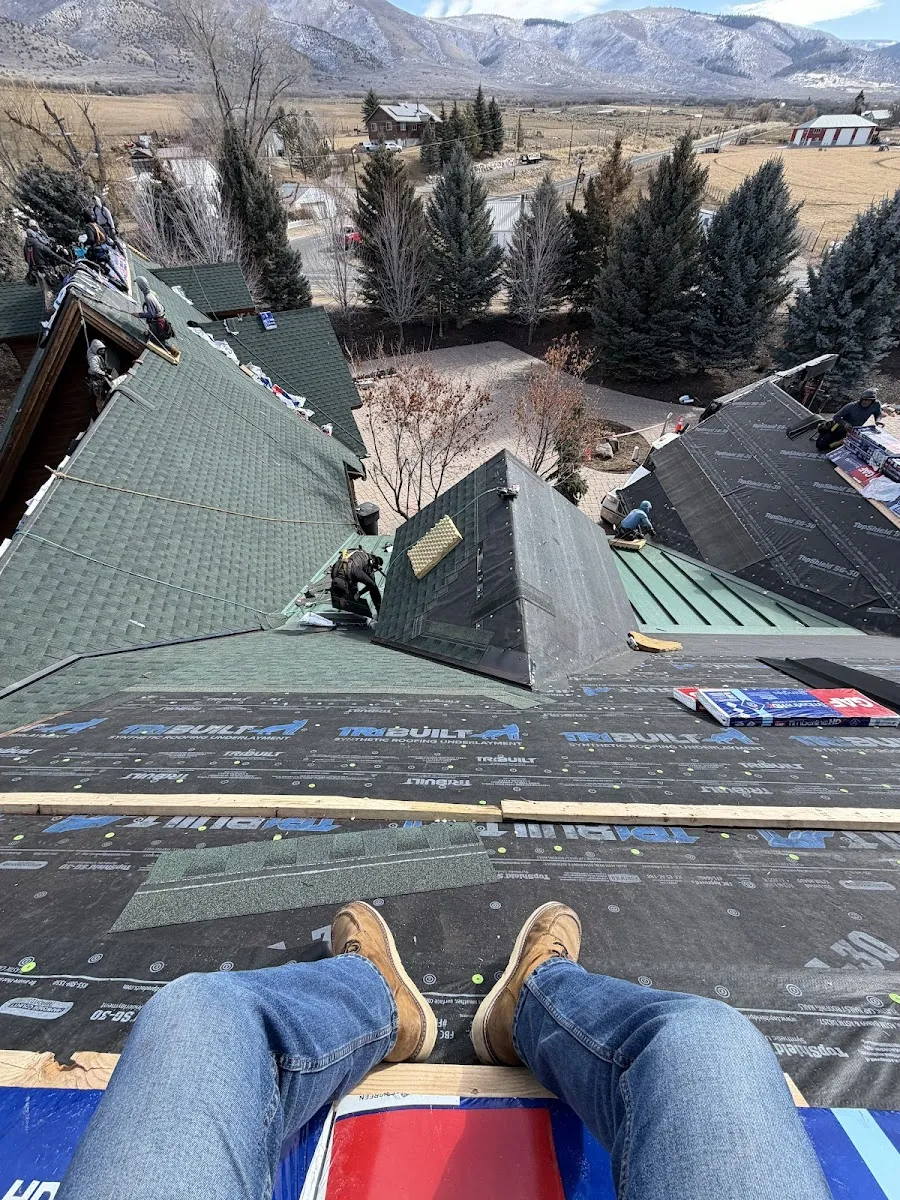
Spring along the Wasatch Front brings unpredictable weather, and Sandy sits right in the crosshairs. Between March and June, cold air funneling off the Wasatch Range collides with rising warm air across the Salt Lake Valley floor, producing hailstorms that can drop marble-to-golf-ball-sized ice on neighborhoods from the Sandy Bench down to the 10600 South corridor. If you live in neighborhoods like Pepperwood, Alta Canyon, or Dimple Dell Estates, your roof is exposed every season.
This guide covers how to spot hail damage, what to do immediately after a storm, and how Frame Restoration Utah in Sandy documents roof conditions so repair or replacement decisions start with clear evidence.
Common Hail Damage Issues in Sandy
Sandy's housing stock ranges from 1970s–80s split-levels near the old downtown to brand-new builds in the southeastern foothills. Hail affects each differently:
- Asphalt shingle roofs (most common): Hail dislodges granules, exposing the mat underneath. You'll see dark, circular bruises or bare spots. Even "small" hail can shorten shingle life by 5–10 years if left unaddressed.
- Tile and composite roofs: Found on newer Sandy homes, these crack or chip rather than bruise. Cracked tiles let water in at the underlayment.
- Metal roofs: Dent but rarely leak from hail alone. However, cosmetic damage still qualifies for storm-damage documentation in many cases.
- Flat/commercial roofs: Membrane punctures are the main risk. Sandy's small-business corridor along State Street and 700 East has many flat-roofed buildings that owners forget to inspect.
Beyond the roof surface, check for:
- Dented gutters, downspouts, and flashing
- Cracked skylights or roof vents
- Damage to AC units or solar panels on the roof
What to Check Right After a Hailstorm in Sandy
Within the first 24 hours:
- Walk the perimeter — look for hail hits on window sills, downspouts, siding, and outdoor AC units. If those surfaces show dents, your roof may also have taken hits.
- Check the gutters — scoop out a handful of gutter debris. If you see a pile of dark, gritty granules (more than normal), shingles are losing their protective layer.
- Photograph everything — date-stamped photos from your phone are gold for storm-damage documentation. Shoot the ground hail (if still visible), siding dings, and gutter granules.
- Do NOT climb the roof yourself — a wet, granule-covered roof after a storm is dangerously slick. Leave the roof-level inspection to a licensed contractor.
- Review your policy — filing and notice windows vary by carrier and policy form. Contact your carrier if you decide to open a roof claim file.
Within the first week:
Schedule a professional roof inspection. Frame Restoration Utah offers free hail-damage inspections for Sandy homeowners. We document visible roof conditions with photos and a written report your carrier can review.
When to Call a Roofer vs. DIY
DIY is fine for:
- Cleaning gutters and downspouts after a storm
- Photographing ground-level damage for your records
- Placing a bucket under an active interior drip as a temporary measure
Call a professional when:
- You see any granule loss, cracked shingles, or dented flashing
- There is an active leak — even a "small" drip can cause mold in Sandy's semi-arid climate because attic moisture gets trapped
- Your home is more than 15 years old — older Sandy homes (Pepperwood, Hidden Valley) often have original roofs that were already near end-of-life before the storm
- You plan to open a storm-damage documentation file — contractor photos, measurements, and repair scopes create a clearer review record than homeowner photos alone
How Frame Restoration Utah Handles Hail Damage Repair in Sandy
- Free on-site inspection — We come to your Sandy home, inspect every plane of the roof, and produce a detailed damage report with photos.
- Carrier-review documentation — We can meet your carrier representative on site when requested to walk through the roof conditions we documented. Coverage decisions stay between you and your insurer.
- Full repair or replacement — Depending on damage severity, we either repair the affected sections or replace the full roof. We use manufacturer-warrantied materials rated for Utah's freeze-thaw cycles.
- Cleanup and final walk-through — Magnetic sweeps for nails, full debris haul-off, and a walk-through with you before we close the job.
Sandy hail damage can lead to repair, replacement, or no carrier-approved work depending on the policy, the roof condition, the storm evidence, and the carrier's findings. Frame Restoration Utah documents what is visible on the roof so that review starts with a clear record.
Source-Backed Sandy Hail Checks
Because Sandy roofs see both valley hail and east-bench freeze-thaw cycles, our inspection notes separate visible impact marks from age, heat, ventilation, and drainage issues.
- Weather records: We use the NWS Salt Lake City Climate Book to anchor storm dates and local weather context when a homeowner needs a cleaner roof history.
- Impact resistance: Class 4 shingle guidance creates a measurable material comparison for hail-prone Sandy homes; impact-resistant does not mean damage-proof.
- Ice barriers: IRC R905.1.2 informs our eave and valley checks, especially where Sandy's shaded slopes hold snow after the valley floor clears.
- Attic ventilation: IRC R806.2 ventilation ratios help identify whether dark shingles, brittle tabs, or attic moisture are storm-related or ventilation-driven.
- Contractor verification: Utah DOPL lookup and Utah home-improvement guidance are the license and written-scope checks.
How do I know if my Sandy roof has hail damage if I can't see it from the ground?
You often can't — that's why a professional inspection matters. Ground-level clues like dented gutters, dings on window trim, and granules in downspout runoff suggest your roof took hits too. We'll get on the roof safely and document everything.
Will filing a hail claim raise my homeowner's insurance rates?
In Utah, hail is classified as a weather event (Act of God), and most insurers do not surcharge for a single weather claim. If you've had multiple claims in 3–5 years, ask your agent before filing.
How long do I have to file a hail damage claim in Utah?
Filing and notice windows are policy-specific. Document hail damage promptly, check your policy, and talk with your carrier before assuming a universal deadline.
Can hail damage void my roof warranty?
Hail itself won't void a manufacturer warranty, but failing to repair documented damage can. If an inspection finds damage and you delay repairs, future leaks may not be covered.
Does Frame Restoration Utah work in my Sandy neighborhood?
Yes. We serve all Sandy ZIP codes — 84070, 84091, 84092, 84093, and 84094 — from the east bench to the valley floor.