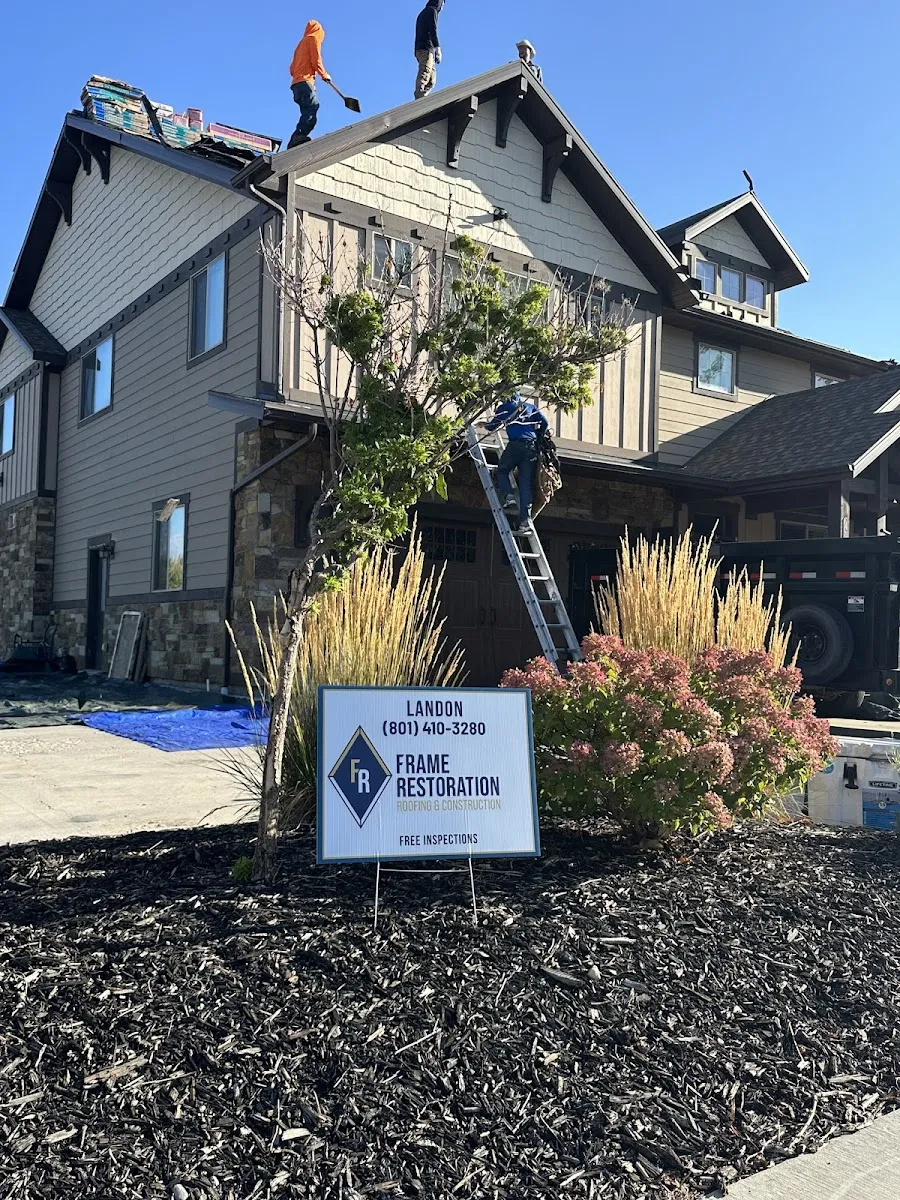
Herriman is one of the fastest-growing cities on the Wasatch Front. Drive through developments along Herriman Main Street, the Rose Creek area, or the neighborhoods climbing toward Butterfield Canyon and nearly everything you see was built after 2005 — many homes after 2015. Homeowners here reasonably assume their roof is fine. It's new. It's under warranty. It can handle whatever Utah throws at it.
Then a spring hailstorm rolls off the Oquirrh Mountains, drops marble-to-quarter-sized ice for twelve minutes, and suddenly "new" doesn't matter. Hail doesn't care when your home was built. And in Herriman, the combination of elevation, exposure to westerly storm cells, and the sheer density of new construction makes hail damage one of the most common — and most underreported — roofing issues in the city.
This guide covers why newer Herriman roofs are vulnerable, how to spot damage you can't see from the ground, and how to document roof conditions before the evidence fades.
Why Newer Herriman Roofs Are Not Hail-Proof
Builder-grade materials are the baseline, not the best. Most production homebuilders in Herriman install the materials that meet code — and not much more. That typically means:
- 25- to 30-year rated 3-tab or basic architectural shingles
- Standard organic or fiberglass felt underlayment
- Minimum-spec galvanized flashing
These materials are fine for normal weather. But Utah's hail hits different. When stones land at speed on builder-grade shingles, they:
- Crack the granule surface, exposing the asphalt mat to UV and moisture
- Fracture the fiberglass mat itself on harder impacts — you can feel it as a soft spot when pressing the shingle
- Dislodge granules in a scattered pattern that's invisible from the ground but obvious up close
Impact-rated shingles (Class 4) are rarely used in new Herriman builds unless the homeowner specifically upgrades. If your builder didn't mention impact resistance, you should verify the product before assuming impact resistance.
Tight lot spacing amplifies the problem. Herriman's newer developments pack homes close together. Fences, walls, and neighboring rooflines can funnel wind and redirect hailstone trajectories, causing uneven damage patterns — one slope gets hammered while the other looks untouched.
Common Hail Damage on Herriman's Newer Homes
On the roof:
- Granule displacement — circular or random bare spots on shingle surfaces. Each spot is a weak point that will deteriorate faster than the surrounding material. On a 5-year-old roof, this can cut remaining shingle life in half.
- Cracked shingles — on harder impacts, the shingle cracks rather than just losing granules. Cracks let water in at the mat level, bypassing the granule waterproofing layer entirely.
- Dented or cracked ridge cap — ridge cap shingles are the most exposed point on the roof and take the most direct hits. Damage here is often the most obvious and easiest to document.
- Damaged pipe boots and vent covers — the plastic and rubber components around roof penetrations crack and split from hail impact. These small items cause big leaks.
Off the roof (ground-level clues):
- Dented aluminum gutters and downspouts
- Dings on window frames, vinyl siding, or garage doors
- Pockmarks on outdoor AC units or utility boxes
- Dented car hoods or roofs (if parked outside during the storm)
Rule of thumb: If your gutters are dented, your roof took hits. Gutters are softer aluminum — if hail dented metal, it damaged shingles.
What to Check After a Hailstorm in Herriman
Day 1 — ground-level documentation:
- Walk the full perimeter of your home. Photograph dented gutters, siding dings, window frame marks, and any damaged outdoor equipment.
- Check the ground for hailstones (photograph them next to a coin for scale if they're still visible).
- Scoop a handful from your gutter trough — excessive dark granules signal shingle damage above.
- Photograph everything with your phone. Date-stamped images are your strongest insurance evidence.
Day 2–7 — professional inspection:
- Schedule a professional roof inspection. Do NOT climb the roof yourself — newer Herriman roofs have steep pitches (often 6:12 to 8:12) that are dangerous without harness equipment.
- A qualified inspector will check every slope, penetration, ridge, and valley and produce a damage report with photos. Frame Restoration Utah offers free hail-damage inspections for Herriman homeowners.
Before evidence fades — policy review:
Policy notice and filing windows vary by carrier and policy form. Document the storm date, photograph visible damage promptly, review your declarations page, and contact your carrier if you decide to open a roof claim file.
When to DIY vs. Call a Roofer
Handle yourself:
- Ground-level documentation and photography
- Gutter cleaning after the storm
- Placing a container under an active interior drip as a temporary measure
Call a professional when:
- You see any of the ground-level clues above (dented gutters, siding marks)
- A neighbor in your development had confirmed hail damage — hail doesn't skip houses
- You're considering filing an storm-damage documentation — carrier-review documentation from a licensed contractor gives your carrier a clearer record than homeowner photos alone
- Your home is in a development that was built with builder-grade shingles (most of Herriman)
How Frame Restoration Utah Handles Hail Damage in Herriman
- Free on-site inspection — We get on the roof with proper safety equipment, inspect every plane, and document each hail hit with close-up photos. You receive a written report.
- Honest assessment — Not every hailstorm warrants a roof claim file. If we inspect and the damage is cosmetic with no functional impact, we'll tell you. If it's real and the shingles are compromised, we'll tell you that too. Our reputation in Herriman depends on honesty, not upselling.
- storm-damage documentation support — When damage needs a written record, we prepare a report formatted for carrier review. We can meet your carrier representative on site when requested and walk through the roof conditions we documented. Coverage decisions stay between you and your insurer.
- Repair or full replacement — Depending on severity:
- Repair: Replace only the damaged shingles, pipe boots, and flashing. Appropriate when damage is limited to one slope or section.
- Full replacement: When damage spans multiple slopes and the roof's integrity is broadly compromised. Carrier review may apply, but coverage depends on policy terms, cause of loss, exclusions, and carrier findings.
- Upgrade opportunity — If you are already replacing the roof, this can be the right time to upgrade from builder-grade to Class 4 impact-rated shingles. Any carrier discount must be verified directly with your carrier because discounts vary by policy, product, and documentation.
- Warranty documentation — We provide manufacturer warranty registration and our own workmanship warranty, documented and filed, so you have coverage on both materials and labor going forward.
My Herriman home is only 3 years old. Can I really have hail damage already?
Yes. Hail damage is event-based, not age-based. A single severe storm can damage a brand-new roof. Builder-grade shingles are especially susceptible because they're designed to meet minimum code, not withstand severe impacts.
Will my builder's warranty cover hail damage?
Builder warranties usually cover defects in workmanship and materials, not damage from weather events. Hail damage is normally reviewed under your homeowner policy, but the exact outcome depends on your policy and carrier findings.
My neighbor filed a hail claim. Should I inspect too?
Yes, an inspection is reasonable. Hail often falls in defined swaths, and Herriman's tightly spaced developments can share the same storm exposure. Your roof still needs its own documented inspection because damage can vary by slope, material, roof age, and wind direction.
Will filing a hail claim raise my insurance premium?
Rate impact is carrier-specific. Ask your agent before filing, especially if you have multiple recent claims or a separate wind/hail deductible. Frame Restoration Utah can document roof conditions, but your carrier decides rating and coverage questions.
What are Class 4 impact-rated shingles and should I upgrade?
Class 4 shingles are tested under UL 2218-style impact methods, including a 2-inch steel-ball impact. They cost more upfront but resist impact damage better than standard shingles. Some carriers may offer discounts for qualifying products, but discounts vary by policy, carrier, product, and documentation. Verify any discount before treating the upgrade as a payback item.
Herriman New-Construction Hail Checks
Newer roofs still need measurable documentation after hail. Our Herriman inspection packet separates builder-grade material limits from real storm evidence.
- Weather context: The NWS Salt Lake City Climate Book helps anchor storm dates and freezing conditions when evidence needs a timeline.
- Impact-rated materials: Class 4 shingle guidance creates a measurable UL 2218-style comparison, but impact-resistant does not mean hail-proof.
- Ventilation and heat aging: IRC R806.2 ventilation checks help separate hail damage from heat-aged shingles on newer tightly built homes.
- Ice-barrier details: IRC R905.1.2 informs eave and valley checks where storms are followed by freeze-thaw cycles.
- Contractor verification: Utah DOPL lookup and Utah home-improvement guidance are the license and written-scope checks.
- Contractor verification: Utah consumer guidance recommends checking contractor license, insurance, written scope, and contract terms before signing after a storm.