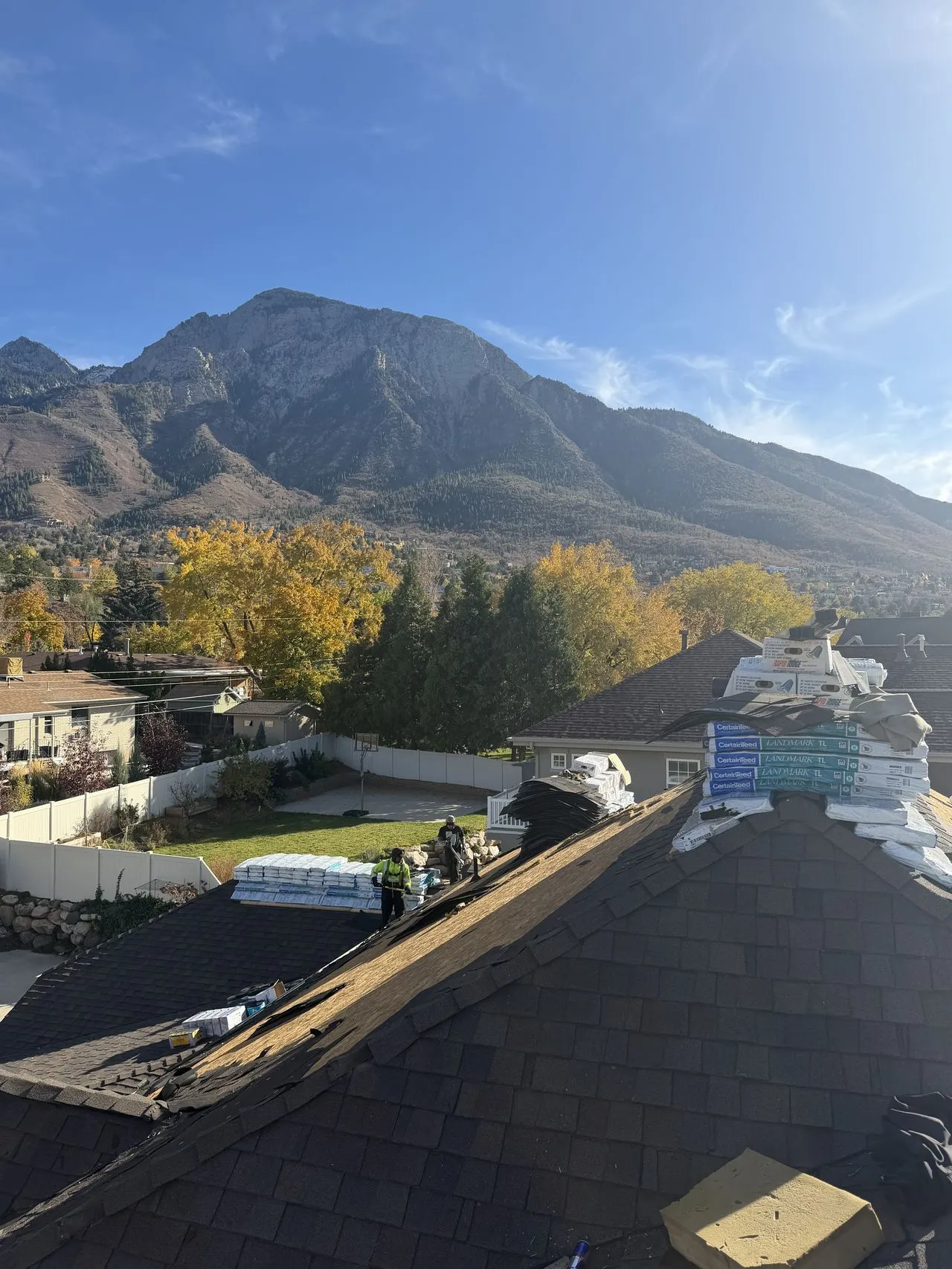
Riverton sits in the heart of Utah's South Valley hail corridor. The geography that makes the area attractive to homeowners — nestled between the Oquirrh Mountains and the Jordan River — also creates atmospheric conditions that produce frequent and intense hailstorms from late spring through early fall. Riverton, Herriman, Bluffdale, and the surrounding 84096 zip code area consistently rank among the hardest-hit communities for hail damage along the entire Wasatch Front.
Hailstorms form when strong updrafts in thunderstorm cells carry moisture upward into freezing temperatures where ice accumulates in layers. The Oquirrh Mountains to the west force warm, moisture-laden air upward as storms move east across the Tooele Valley, intensifying the updrafts that create hail. By the time these storms reach Riverton and Herriman, they have had the perfect conditions to produce damaging hail, often ranging from pea-sized to quarter-sized and occasionally reaching golf ball dimensions.
The south valley communities also sit at elevations between 4,500 and 5,000 feet, which means hailstones have less distance to fall and less time to melt before impact. The result is that Riverton homeowners experience hail damage more frequently and more severely than homeowners in lower-elevation areas of the Salt Lake Valley.
A proper hail damage inspection is much more than glancing at your roof from the driveway. When a licensed inspector from Frame Restoration Utah examines your Riverton home after a hailstorm, they follow a systematic process designed to identify every type of hail damage and document it thoroughly for your storm-damage documentation.
Asphalt shingles are coated with ceramic granules that protect the underlying asphalt from UV degradation. When hail strikes, it dislodges these granules, exposing the dark asphalt beneath. Fresh granule loss appears as dark spots or patches on the shingle surface. An inspector will check your gutters and downspout extensions for accumulated granules, which is a reliable indicator of widespread hail impact even when individual hits are hard to see from a distance.
A bruised shingle has suffered an impact that compresses the asphalt mat beneath the granule surface without necessarily cracking the shingle or creating an obvious mark. Bruising compromises the shingle's structural integrity and shortens its lifespan significantly. Detecting bruises requires physically touching the shingle — a trained inspector will press on suspected impact areas to feel for the soft, spongy texture that indicates a bruise beneath the surface. This is one reason why professional inspections catch damage that homeowners and some carrier inspections can miss.
Larger hailstones can crack shingles on impact, creating fractures that allow water to penetrate to the underlayment and decking below. Cracks may follow the line of the hailstone impact or radiate outward from the point of contact. On older shingles that have already lost flexibility due to age and UV exposure, hail impacts are more likely to cause cracking because the asphalt has become brittle.
Hail does not just damage shingles. Metal flashings around chimneys, vents, and skylights can be dented and deformed, breaking the watertight seal they are designed to maintain. Roof vents, pipe boots, and ridge vent covers are also vulnerable. Your inspector will examine every roof penetration and accessory for hail damage as part of the complete inspection.
If you decide to open a roof claim file, your carrier controls coverage review. Frame Restoration Utah's role is construction documentation: photos, measurements, roof-condition notes, and a written repair or replacement scope your carrier can read.
A carrier representative may inspect the roof, siding, windows, and other exterior components that may have been damaged. The initial estimate may not capture every construction item, which is why a contractor-written scope is useful as documentation.
If a carrier scope appears to miss visible roof conditions, your contractor can provide additional construction documentation for review. That is not the same as adjusting coverage; the roof claim file stays between you and your insurer.
Filing and notice windows are policy-specific. Do not assume a universal one-year deadline, and do not rely on a contractor to interpret your policy. Document the storm date, take photos promptly, review your declarations page, and contact your carrier if you decide to file.
If you are unsure whether your roof has hail damage, get a free inspection while the evidence is fresh. It costs you nothing to have a professional look, and the inspection record helps separate new hail impacts from older wear.
The decision between repairing and replacing a hail-damaged roof depends on the extent and pattern of the damage. If hail impacts are limited to one slope or a small area, targeted repairs may be sufficient. Your contractor will replace the damaged shingles, matching the existing product as closely as possible, and ensure the surrounding area is properly sealed.
When hail damage is widespread across multiple slopes, a full replacement may be the correct construction recommendation. Whether a carrier approves that scope depends on policy language, the observed damage pattern, roof age, prior condition, and carrier findings.
While you cannot prevent hail, you can make your roof more resilient. Impact-resistant shingles rated Class 3 or Class 4 on the UL 2218 scale are designed to withstand impacts that would damage standard shingles. Some Utah carriers may offer premium discounts for qualifying Class 4 products, but discounts vary by carrier, policy, product, and documentation. When it comes time for your next roof replacement, ask your contractor about impact-resistant options and verify any discount directly with your carrier.
For a Riverton inspection, we anchor the roof report to objective inputs instead of guesswork: storm dates, visible impact patterns, material standards, and code-sensitive roof details.
We inspect roofs across Riverton, Herriman, Bluffdale, South Jordan, and all of the South Valley. Free inspection, no obligation, and we document the damage so your carrier-review file starts with clear construction documentation.
Call (435) 292-8802