Utah County
Roofing
The Utah County hub: every published city page in the county, plus what elevation, wind, and exposure actually change about a roof here. Free inspections, licensed and insured in Utah.
Roofing Across Utah County
Seventeen Utah County cities have published location pages here. The county's defining roofing feature is not elevation — it is canyons, and the wind that comes out of them.
Frame Restoration Utah is a licensed Utah roofing contractor (Utah DOPL #14256097-5501), BBB Accredited, based at 142 S Main St in Heber City. Roof inspections are free throughout our service area, and qualifying work carries a 10-year workmanship warranty. This page is the Utah County hub: the published city pages below, plus what is actually different about roofing here.
Canyon Mouths Concentrate the Damage
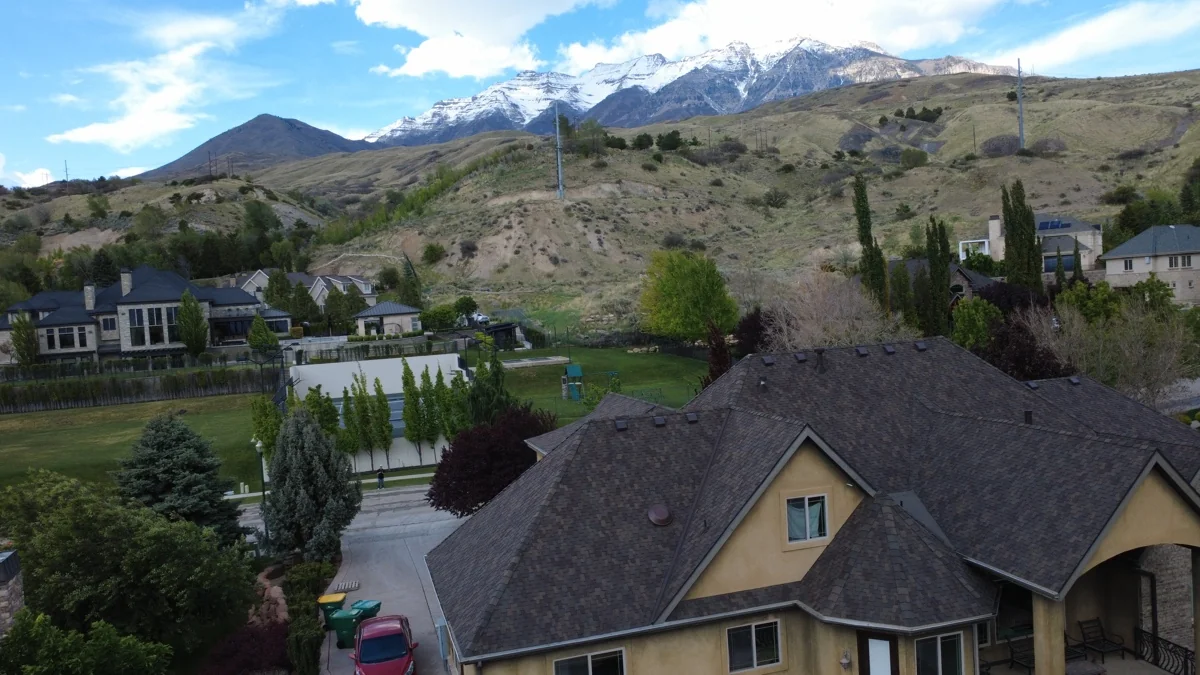
Provo sits at the mouth of Provo Canyon, which creates one of Utah County's most concentrated storm funnels. Canyon-effect winds and mountain-generated hail hit the city's residential areas from May through August, and the east-bench neighbourhoods take the most intense exposure. Provo Canyon also channels cold air and heavy snow into the city in winter, which is why east-bench homes there see heavier winter conditions than the numbers for a 4,551-foot elevation would suggest.
The same mechanism applies up and down the county wherever a canyon opens onto the valley. Provo's position at the base of the Wasatch and alongside Utah Lake creates a convergence zone where mountain storms meet lake-moderated air, producing what is fairly described as the county's most complex weather. Orem stretches along the Wasatch bench from Provo to Lindon, so its exposure varies west to east: eastern neighbourhoods near the mountains receive higher precipitation and more intense hail, while western Orem's proximity to Utah Lake moderates temperature but adds its own moisture.
The North County Wind Gap
Lehi sits in the north Utah County wind gap at the Point of the Mountain, and the result is strong, steady wind that tests shingle adhesion year-round. That matters specifically because Lehi's growth added tens of thousands of newer roofs in a short period, and first-generation builds are where wind finds adhesion weaknesses first. High-wind-rated shingles are the baseline here, and the higher Traverse Mountain areas see heavier snow on top of the wind.
Winter installation in Lehi needs calm-wind windows, which is a scheduling constraint rather than a material one, but it is a real one.
A County-Wide Reroof Wave
Orem's broad base of 1970s-to-1990s homes is reaching reroof age together, and its position below Provo Canyon brings wind and afternoon sun that age asphalt shingles steadily. That pattern — a large cohort of homes built within a couple of decades of each other, all exposed to the same canyon wind and high-altitude sun — repeats across the established parts of the county. The useful homeowner question in those neighbourhoods is not whether the roof needs replacing eventually, but whether it needs it before or after the next two winters, and that is answerable from an inspection rather than from a hunch.
Elevation Range and Snow
The county's published elevations run from about 4,550 feet at Lehi to 5,100 at Santaquin, with Alpine at 4,990 and Highland at 4,800. Valley-floor cities see moderate winter conditions where standard ice-and-water shield requirements apply. Bench and foothill communities see heavier snow and benefit from enhanced underlayment. The Utah Ground Snow Load Map is the reference for the elevation-based part of that answer.
HOA Variation Is Wide Here
Utah County runs the full range. Provo has no-HOA student-housing areas at one end and strict CC&Rs in east-bench developments and newer subdivisions near Rock Canyon at the other. Orem mixes older non-HOA neighbourhoods with newer developments that have architectural requirements, particularly near the university area and the east bench. We verify requirements per property.
What Canyon Wind Means for Fasteners
Wind damage is usually a fastening story rather than a material story. Shingles lift where the adhesive strip never fully bonded, where nails were driven high or overdriven, or where a starter course was skipped at a rake edge. Steady canyon wind finds every one of those shortcuts, which is why the fastening pattern and starter detailing on an exposed Utah County roof matter at least as much as the shingle brand printed on the bundle.
High-wind-rated shingles with the correct nailing pattern are the baseline for canyon-mouth and wind-gap addresses. Class 4 impact-resistant architectural shingles handle the hail side. Bench and foothill homes add enhanced underlayment for snow, and ridge and soffit ventilation sized to IRC R806.2 keeps the deck from cooking under the county's strong afternoon sun.
Lake-Effect Moisture and Afternoon Sun
Utah Lake moderates temperature along the county's western edge, which sounds benign and is not entirely. Moderated air carries moisture, and moisture plus the long afternoon sun exposure that western-facing slopes receive accelerates the cycle of surface drying and wetting that loosens granule beds over time. Shaded northern slopes on the same house hold damp longer and grow organic film.
The practical upshot is that two slopes on one roof can age at noticeably different rates, and an inspection that only walks the convenient side of the building misses half of the story. We photograph every aspect and note the orientation.
Newer Builds Have Their Own Failure Pattern
The county's rapid growth produced an enormous number of roofs installed within a short span of years, and first-generation production roofs tend to fail in predictable places: wind-lifted tabs at rake and ridge, pipe boots that crack early, and valley detailing done quickly. None of that requires a full replacement in year eight. It does reward an inspection, because catching a cracked boot or a lifted ridge course is a repair, while discovering it after two winters of water travel is a deck conversation.
At the other end of the county, established neighbourhoods in Provo, Orem, Springville, and Payson are working through a genuine reroof wave. Frame Restoration Utah provides free inspections, 24/7 storm response, and emergency tarping across all of it, and financing is available on roofing and restoration projects.
Utah County Cities With Published Roofing Pages
Each city page covers local conditions, housing context, and the roofing services available there. Elevations shown are the figures published on those pages.
| City | Published elevation |
|---|---|
| Provo | 4,551 ft |
| Orem | 4,770 ft |
| Lehi | 4,550 ft |
| American Fork | 4,600 ft |
| Pleasant Grove | 4,630 ft |
| Springville | 4,600 ft |
| Spanish Fork | — |
| Payson | 4,700 ft |
| Santaquin | 5,100 ft |
| Saratoga Springs | — |
| Eagle Mountain | — |
| Alpine | 4,990 ft |
| Highland | 4,800 ft |
| Cedar Hills | — |
| Lindon | 4,650 ft |
| Vineyard | — |
| Mapleton | — |
Services Available Throughout Utah County
The same crews and the same scope discipline apply county-wide: roof repair, roof replacement, roof maintenance, storm damage roofing, emergency tarping, gutters, siding, and residential and commercial roofing. Financing is available on roofing and restoration projects. Every one of those starts the same way: a free inspection, photographs, and a written scope.
Free Roof Inspection in Utah County
We document what the roof actually needs and put it in writing. No cost, no obligation.
Schedule Free Inspection Call 435-292-8802Utah County Cities We Serve
Utah County Roofing FAQs
Which Utah County cities does Frame Restoration Utah cover?
Seventeen cities have published location pages: Provo, Orem, Lehi, American Fork, Pleasant Grove, Springville, Spanish Fork, Payson, Santaquin, Saratoga Springs, Eagle Mountain, Alpine, Highland, Cedar Hills, Lindon, Vineyard, and Mapleton.
What is the main roofing risk in Utah County?
Canyon wind and mountain-generated hail from May through August, concentrated at canyon mouths and on east-bench neighbourhoods. Provo Canyon is the clearest example, and it channels cold air and heavy snow into the city in winter as well.
Why does Lehi need high-wind-rated shingles?
Lehi sits in the north Utah County wind gap at the Point of the Mountain, where strong, steady wind tests shingle adhesion year-round. The Traverse Mountain areas also see heavier snow, and winter installations need calm-wind windows.
Do Utah County homes need Class 4 impact-resistant shingles?
Class 4 impact-resistant architectural shingles are the common answer for the county's regular hail exposure, and east-bench homes also benefit from enhanced underlayment and wind-rated options. The right specification depends on the property, which is what the free inspection establishes.
Is the roof inspection free in Utah County?
Yes. Frame Restoration Utah provides free roof inspections across our Utah service area. Call 435-292-8802.