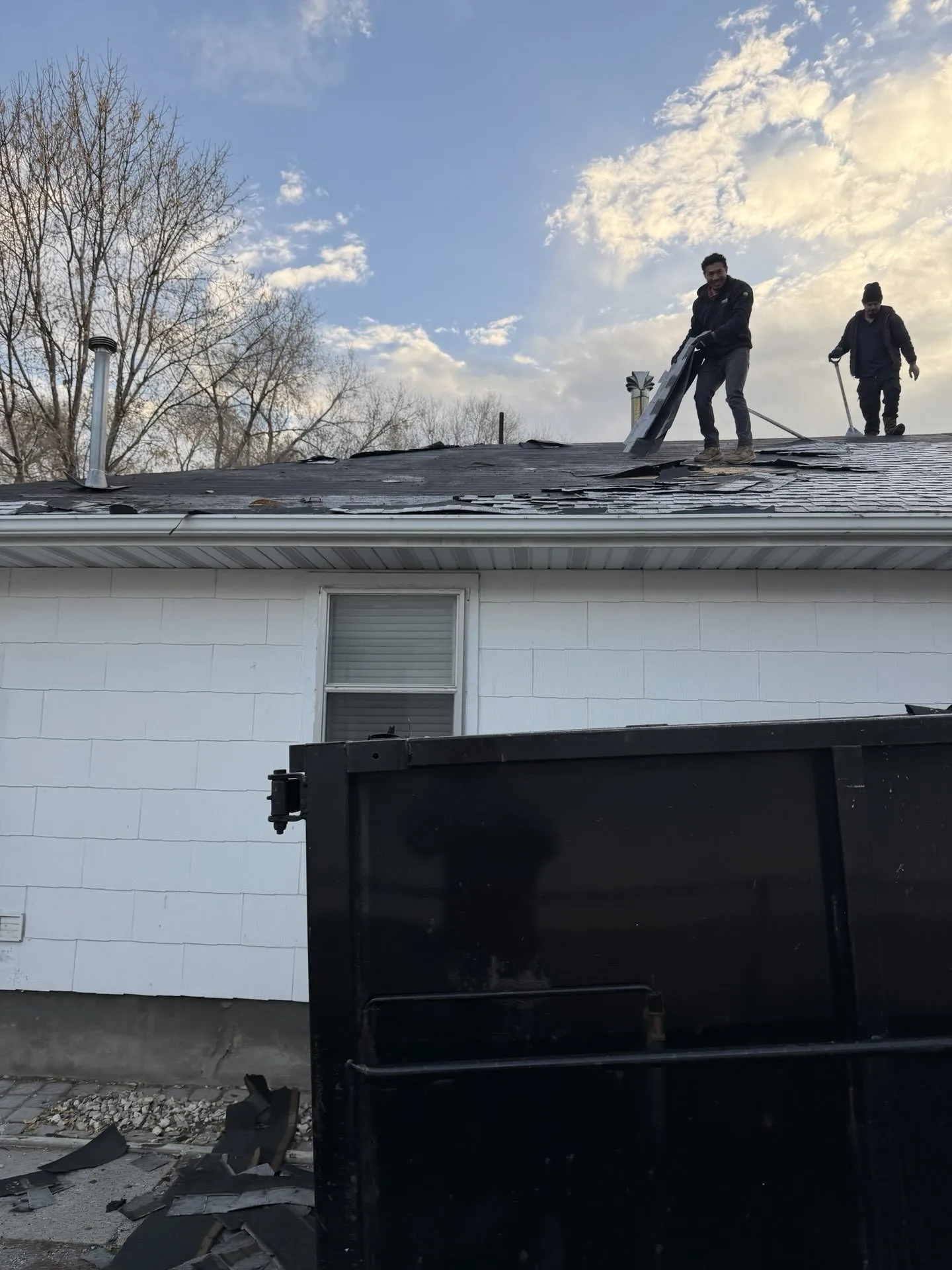
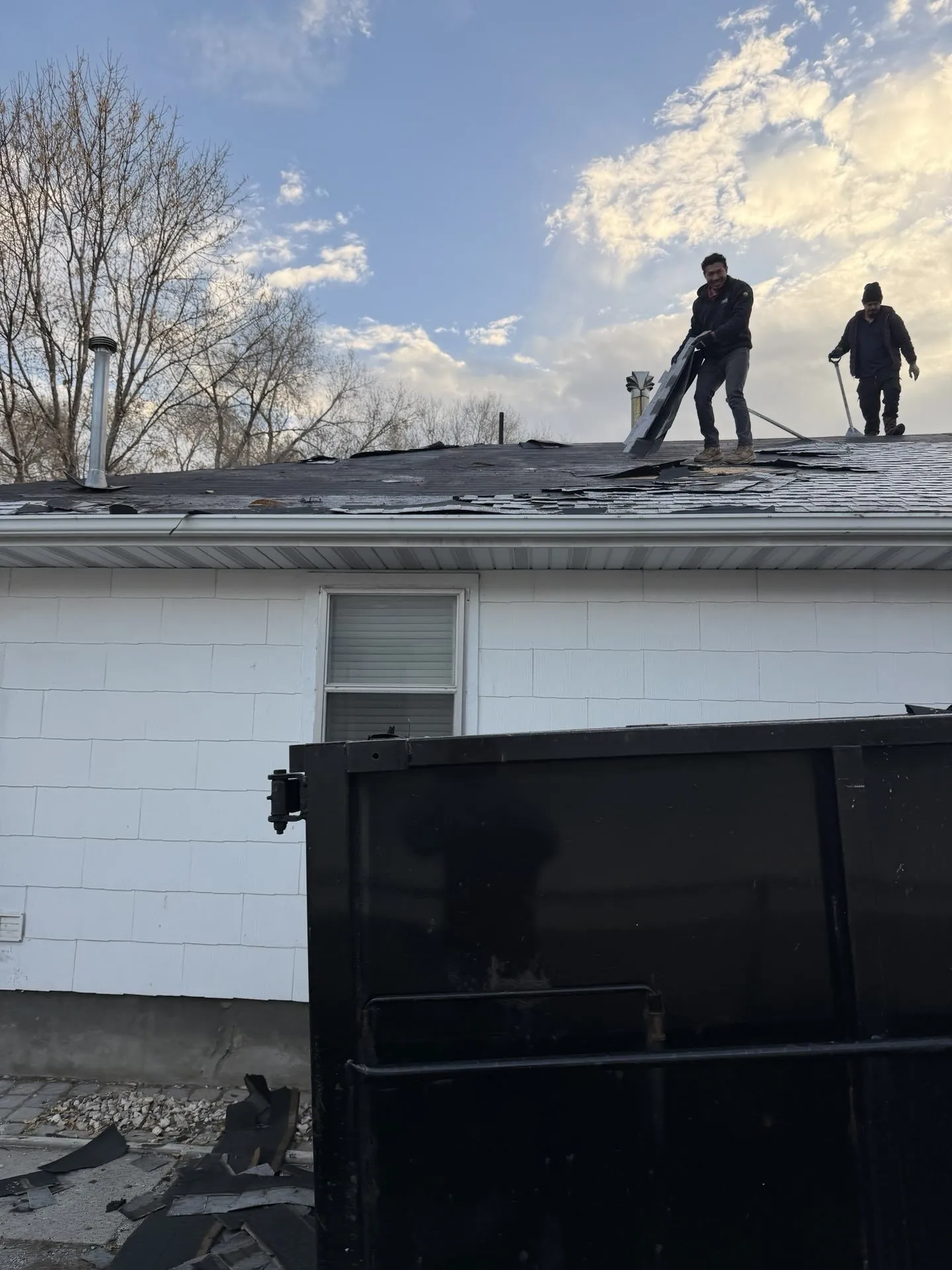
Storm and Hail Damage Roof Repair in Salt Lake City
A gust peeled a strip of shingles off the back slope of a Sugar House bungalow, and the sky is still dark over the Oquirrhs. If the roof is open, call 435-292-8802: emergency tarping and storm response are available 24/7. The inspection and the permanent repair follow during business hours.
Older roofs, layered repairs, and what a storm finds first
Storm damage roof repair in Salt Lake City starts with stopping the water: emergency tarping and storm response are available 24/7. Then comes a slope-by-slope inspection and a permanent repair built for the city's older roofs, duplexes, and low-slope additions.
At a glance: storm damage in Salt Lake City
- Roof open?
- Emergency tarping and storm response, 24/7: 435-292-8802
- Inspections and repairs
- Business hours: Mon–Fri 8am–7pm, Sat 8am–6pm, Sun closed
- Coverage
- Salt Lake City and the Wasatch Front, from our Salt Lake City service-area profile. We come to you.
- Older homes
- We note existing materials for historic district review before work starts
- License
- Licensed Utah contractor (DOPL #14256097-5501), BBB Accredited
Salt Lake City's housing is old by Utah standards. Census ACS 2020–2024 estimates put the median year built at 1965, with about 78% of homes built before 2000 and roughly a quarter built in 1939 or earlier. Plenty of those roofs have already been patched, re-flashed, or covered with a second layer, and hail or wind goes straight for the weakest of those old repairs.
It is also a city of renters: fewer than half of occupied homes are owner-occupied, per the same ACS estimates. For a duplex in Liberty Wells or a converted house near the U, the storm scope is written so an owner or property manager who was not there can see each finding, slope by slope.
Four kinds of storm damage on Salt Lake City roofs
These are the patterns that show up again and again on Salt Lake City homes and small buildings after a storm.
Hail on Older Asphalt
Bruised and granule-stripped shingles on aging roofs, plus dented vents, gutters, and soft metals that show the hail's size and direction.
Wind-Lifted Shingles
Creased or missing tabs on ridges and rakes, common on exposed east bench homes and older roofs with tired sealant strips.
Low-Slope Additions
Ponding, torn seams, and failed flashing on the flat rear additions many older Salt Lake City homes carry.
Storm-Opened Roofs
Emergency tarping when a limb, gust, or hail leaves the roof open, then a permanent repair. See emergency roof tarping.
How a Salt Lake City storm repair runs
A Salt Lake City storm repair moves in four stages, and the first one only happens if the roof is open.
-
1. Stop the water
If the roof is open, the crew tarps it and fastens the tarp to hold until the permanent repair, as weather and safety allow. Wet ceilings and attics get photographed now, before they dry and the evidence fades.
-
2. The inspection
A walk around the house first, looking at gutters, downspouts, vents, and window screens for dents. Then the roof itself, slope by slope: hail hits marked and counted, lifted tabs photographed, and old patches separated from new damage.
-
3. The written scope
You get the photos, the findings for each slope, and a plain recommendation: repair, or replace. In a historic district, the scope also records the existing material and color so the city review question can be answered first.
-
4. Repair day
Old material comes off down to the decking, and any soft or rotted boards are replaced before new underlayment, flashing, and shingles go on. The low-slope addition, if there is one, is done as part of the same job.
How big has the hail been near Salt Lake City this year?
Large hail came close to Salt Lake City in 2026. Preliminary Storm Prediction Center reports for the evening of June 25, 2026 list hail up to 1.75 inches in Taylorsville and about 1.5 inches in Holladay, both a short drive from the city's neighborhoods.
Hail does not have to be golf-ball sized to hurt a Salt Lake City roof. On 30- and 40-year-old shingles, smaller stones can still crack the mat or knock off the granules that protect it. Frame Restoration Utah separates fresh hail bruising from plain old age before recommending anything, because a roof that is simply worn out needs a different conversation than one a storm just damaged.
Neighborhoods that need a closer look after a storm
Salt Lake City storm inspections take the most care where the roofs are oldest and most complicated. In the Avenues and on Capitol Hill, steep pitches, dormers, and old chimneys create flashing joints that a storm can pry open. In Sugar House, Liberty Wells, and 9th and 9th, bungalows often have a low-slope rear addition tied into a steeper main roof. On the east bench, more exposure means more wind on ridges and rakes. In Rose Park and Glendale, mid-century ramblers sometimes hide decking damage under an old overlay.
Yalecrest and the city's other local historic districts can add a review step if a repair changes roofing material or visible details. We record what is on the house now and point owners to Salt Lake City Historic Preservation so that question is settled before work starts.
Emergency or not?
A Salt Lake City storm is an emergency when the roof is open or water is coming inside. Call 435-292-8802; emergency tarping and storm response are available 24/7. A few missing shingles on a dry day, or a roof you just want checked after hail, can wait for an inspection during business hours (Mon–Fri 8am–7pm, Sat 8am–6pm, Sun closed).
If water has already reached ceilings, insulation, or a basement, see water damage restoration in Salt Lake City. If the storm took siding too, see siding replacement and repair in Salt Lake City or the Utah siding guide. For a sagging ceiling or a downed power line, leave the area and call emergency services first.
What moves the scope of a Salt Lake City storm repair
We do not publish prices for Salt Lake City storm work, because the roof decides the scope. These are the factors that change it, and what we write down for each.
| Factor | Why it matters | What we document |
|---|---|---|
| Roof age and prior repairs | Many Salt Lake City roofs carry decades of patches and overlays that change what can be repaired versus replaced. | Visible prior repairs, number of layers at test points, and shingle condition outside the storm damage. |
| Pitch, dormers, and chimneys | Steep Avenues and east bench roofs need more safety setup and more flashing work. | Pitch per slope, dormer and chimney count, and flashing condition. |
| Low-slope sections | Flat or low-slope additions use different materials than the main roof. | Membrane type, seams, drains, and ponding marks. |
| Decking condition | Older plank or board decking can be damaged or deteriorated under the shingles. | Soft spots, interior stains, and attic photos where accessible. |
| Collateral damage | Hail and wind also damage gutters, vents, skylights, and siding. | Dented soft metals, cracked vents, and damaged elevations, photographed. |
| Historic district review | Material or visible-detail changes in a local historic district may need city review. | Existing material, profile, and color, recorded before any change is proposed. |
Worth gathering before the inspection
None of this is required, but each item makes a Salt Lake City storm inspection faster and the written scope sharper.
- The date and approximate time of the storm.
- Photos from the ground of each side of the home, taken before anything is moved.
- Any interior leak spots, with photos of ceilings or attic stains.
- The roof's approximate age and any past repairs you know about.
- Whether the home is in a local historic district (for example, Yalecrest or the Avenues).
- If you are a landlord or property manager, the best contact for tenant access.
Paperwork for your insurer
A Salt Lake City storm inspection ends with dated photos, labeled findings, and a written repair scope you can share with your insurer. Coverage decisions stay between you and your insurance company; we document storm damage and repair roofs, we do not adjust claims, and required out-of-pocket amounts remain the homeowner's responsibility under Utah law. For how the documentation fits a claim, see roof insurance claims in Utah.
Recent Frame Restoration Utah roofs in Salt Lake City
Both projects below are in Salt Lake City, captioned with their true location.
Keep reading
Salt Lake City Roofing
Roof repair, replacement, and the full Salt Lake City FAQ →
Storm Damage Roofing in Utah
How we inspect and repair hail and wind damage statewide →
Emergency Roof Tarping
What happens when a storm leaves the roof open →
Salt Lake City Water Damage
Extraction, drying, and repairs when storm water gets inside →
Salt Lake City storm questions
Public sources we check for Salt Lake City storm work
Weather records, housing data, permits, and historic district review: the public sources behind a Salt Lake City storm scope.
- NOAA Storm Prediction Center: Preliminary Storm Reports, June 25, 2026
- National Weather Service Salt Lake City: Climate Book
- U.S. Census ACS 2020–2024 5-Year Estimates: Salt Lake City (via Census Reporter)
- Salt Lake City Building Services
- Salt Lake City Historic Preservation: Applications and Approvals
- Utah DOPL: Contractor License Lookup
Storm Damage Roof Repair Near Salt Lake City
Storm Opened Your Roof? Call Now
Emergency tarping and storm response in Salt Lake City are available 24/7. Inspections are booked during business hours.
Call 435-292-8802 Contact Options