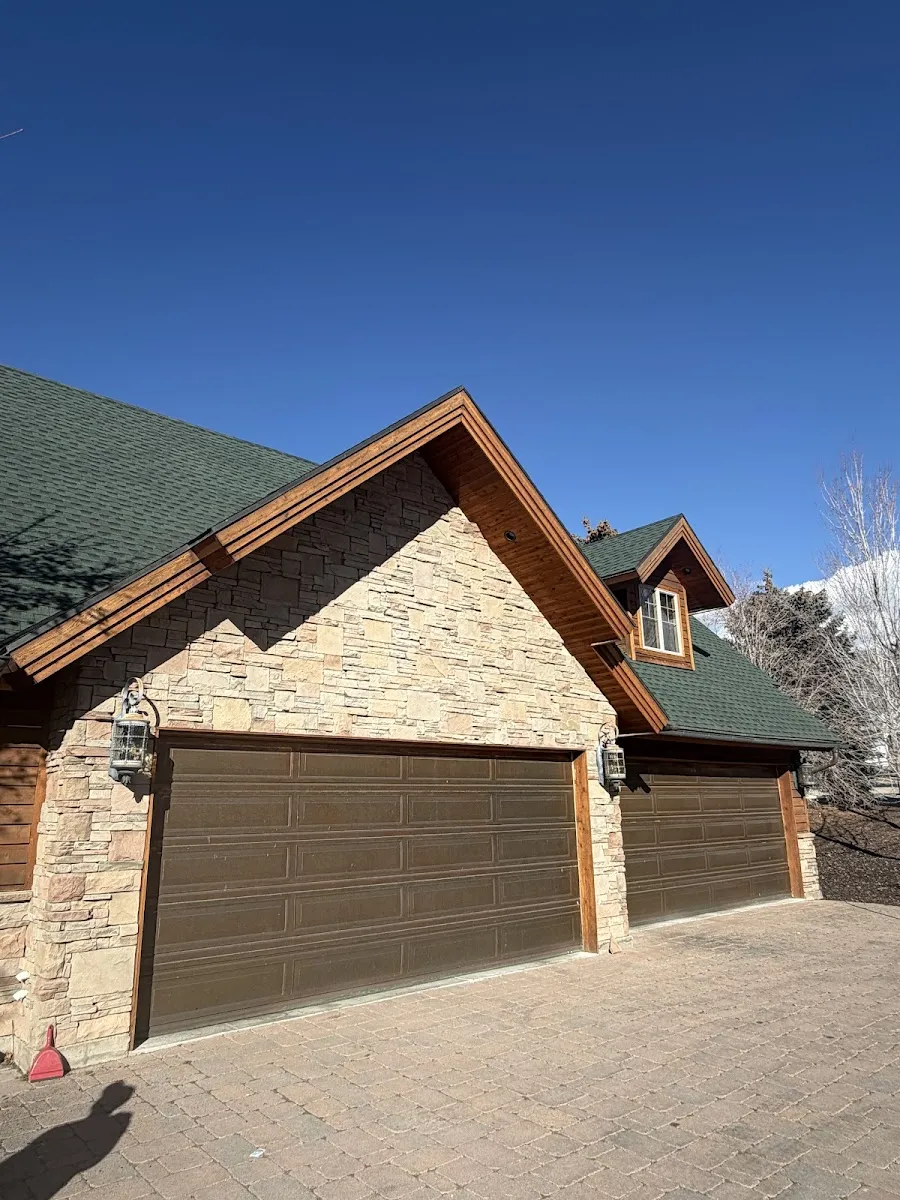
Natural cedar shake has defined mountain architecture for generations. The warmth of hand-split wood, the dimensional shadow lines, the way a cedar roof settles into its surroundings like it's always belonged there — these are qualities that draw Park City homeowners to the material instinctively. But at 7,000 feet, natural cedar tells a different story. UV intensity accelerates surface degradation. Freeze-thaw cycling splits and cups individual shakes. Moisture retention invites moss, mildew, and premature rot. A cedar roof that might last thirty years at sea level often requires replacement in fifteen to twenty at elevation.
Designer shake-style shingles deliver the aesthetic warmth Park City homeowners want while addressing many of the weaknesses that make natural cedar challenging in mountain climates. Today's premium composites and architectural laminates use deeper profiles, molded texture, and multi-tone color blending to create a cedar-style look at street level while giving the installer clearer fire-rating, wind-rating, impact, and ventilation documentation to review before installation.
Why Natural Cedar Struggles at Elevation
Understanding why designer alternatives outperform requires understanding what elevation does to natural wood. Park City's climate subjects roofing materials to conditions that accelerate deterioration through multiple simultaneous mechanisms.
UV radiation at 7,000 feet is roughly 25 percent more intense than at the Wasatch Front. This breaks down cedar's natural lignin — the structural polymer that gives wood its rigidity and weather resistance. Without regular treatment, cedar shake surfaces begin graying and checking within three to five years. The protective oils that manufacturers apply at the factory don't last long under mountain-intensity UV.
Moisture cycling compounds the problem. Cedar absorbs and releases water with every weather change, and Park City's rapid temperature swings mean that cycling happens constantly. Shakes that absorb afternoon snowmelt freeze overnight, expand, contract, and gradually develop the cupping and splitting that lets water penetrate deeper into the wood. Each cycle weakens the material further.
Fire-rating documentation adds another review point. Natural wood shakes and modern designer products are not evaluated the same way, and some Park City homes sit near wildland-urban interface exposure. Before a homeowner assumes anything about carrier treatment, the material's fire-rating sheet, local design rules, and policy language should be checked directly.
What Makes Designer Shake Different
The term "designer shake-style shingles" encompasses several product categories, and the differences matter. Premium options from manufacturers like CertainTeed Grand Manor, GAF Camelot, and DaVinci Roofscapes use fundamentally different approaches to achieve the shake aesthetic, and each has characteristics that suit different architectural contexts in Park City.
Architectural Laminate Shingles
Higher-end asphalt-based options use multi-layered laminate construction to create dimensional profiles that mimic hand-split cedar. CertainTeed's Grand Manor and GAF's Camelot series use triple-laminate designs with shadow bands and irregular butt edges that produce the deeper, textured appearance of thick-cut cedar. Warranty terms and wind ratings vary by exact product, fastening method, deck condition, ventilation, and registration, so the published specification sheet matters more than a generic material label.
At Park City elevation, one advantage of premium architectural laminates is SBS-modified asphalt formulation where the selected product includes it. Polymer modification can improve cold-weather flexibility compared with standard asphalt, but the final performance depends on the exact product, installation temperature, fastening, ventilation, and roof exposure.
Composite Polymer Shingles
DaVinci Roofscapes and similar manufacturers produce composite shingles using engineered polymer resins molded from actual cedar shake masters. These products achieve the most realistic wood appearance of any synthetic option — the grain detail, color variation, and dimensional irregularity are sculpted from real hand-split shake specimens. From fifteen feet away, even experienced roofers have difficulty distinguishing them from natural cedar.
Composite polymer shingles can carry long warranty options and are designed to reduce the moisture absorption that affects natural wood. They still need product-specific installation, ventilation, expansion, and transition details to perform correctly in freeze-thaw conditions. For Park City homes where the aesthetic of natural wood is important but exposed wood is not the right fit, composites are one option worth reviewing beside premium architectural laminates and standing seam metal.
In roofing terminology, "architectural" refers to a multi-layer laminate shingle — the standard upgrade from three-tab. "Designer" usually refers to the premium tier above basic architectural: thicker profiles, more dimensional variation, specialized color blending, and stronger published rating options from the manufacturer. For Park City luxury homes, this distinction matters because design review, roof pitch, snow exposure, and visible roof planes can make material depth and color variation more important than on a simple low-slope suburban roof.
Architectural Integration for Park City Homes
Park City's architectural landscape spans mountain modern, rustic-luxury, traditional alpine, and everything between. The right shake-style shingle needs to integrate with the specific design language of each home — this isn't a one-product-fits-all decision.
Rustic-Luxury and Traditional Mountain
Homes with exposed timber elements, stone facades, and traditional mountain proportions benefit from the deepest-profile designer shakes. Multi-tonal color blending in warm cedar tones — with variation from honey blonde through weathered gray-brown — creates the established, time-settled appearance these architectural styles demand. DaVinci's multi-width Bellaforté shake or CertainTeed's Grand Manor with custom color blending deliver the dimensional authenticity these homes require.
Mountain Modern and Contemporary
Clean-lined contemporary homes present different requirements. Here, the shake profile needs to be more uniform — controlled randomness rather than wild variation. Darker, more uniform color blends in charcoal, slate, or deep umber create contrast against glass and metal elements while maintaining the natural warmth that connects the home to its mountain setting. GAF's Camelot II in dark colorways or DaVinci in single-width configurations with minimal color variation achieve this refined look.
Multi-Material Rooflines
Many Park City homes use multiple roofing materials across different planes — standing seam metal on primary roof faces with shake-style shingles on dormers, accent gables, or lower-slope secondary roofs. This layered approach creates visual depth and architectural interest. When combining materials, the shake-style shingle selection needs to complement the metal color and profile rather than compete with it. We coordinate material and color selection across both products so the finished roofline reads as a cohesive, intentional design.
Park City HOA and architectural review outcomes depend on the specific community rules, material sample, color, fire rating, and roof profile. Many committees will consider high-end composites and architectural laminates because they preserve the shake-style look while reducing wood-shake maintenance concerns, but approval should never be assumed. We recommend submitting material samples and manufacturer specifications to your HOA's architectural review committee before finalizing your selection.
Performance at 7,000 Feet
The performance gap between natural cedar and designer alternatives widens with elevation. Every environmental factor that challenges roofing materials is amplified at Park City's altitude, and designer shingles are engineered to address each one specifically.
Wind Resistance
Park City experiences regular wind events, with canyon-effect gusts capable of loading roof edges, ridges, and exposed planes. Natural cedar shake relies on individual attachment, while many designer shingles use sealant strips and tab designs that are tested as a roof system when installed exactly as specified. Published wind ratings should be matched to the product, fastening pattern, exposure category, deck condition, and warranty requirements before selection.
Impact Resistance
Hail is an annual reality in the Wasatch Mountains. Many designer shake-style shingles carry Class 4 impact ratings — the highest available UL 2218 class — meaning the published test reference uses a 2-inch steel ball dropped from 20 feet. Natural cedar offers no comparable standardized impact class, and older cedar roofs deserve extra scrutiny after hail because UV degradation can compromise the wood's structural integrity.
Snow and Ice Performance
Park City's snow loads are substantial and sustained. Designer shingles provide a smoother, more consistent surface than natural cedar, which can make snow movement and meltwater routing easier to evaluate than on irregular, cupped, or split shakes. When paired with correct underlayment, ice-barrier placement at eaves, and well-detailed valleys and sidewalls, designer shake roofs reduce common leak pathways that show up on aging cedar installations.
Cost and Long-Term Value
Premium designer shake-style shingles cost more than standard architectural shingles, so the value case should be built from roof size, slope, access, maintenance expectations, product warranty terms, and the home's architectural goals.
Initial installed cost for designer shake products on a Park City home depends on home size, roof complexity, access, tear-off condition, underlayment upgrades, flashing details, and specific product selection. Natural cedar shake installation can be comparable or higher because the material cost, fastening requirements, treatment needs, and maintenance expectations are different from composite or laminate systems.
The value comparison is strongest when maintenance is included. Natural cedar at Park City elevation may require periodic treatment, cleaning, and closer monitoring for cupping, splitting, and moss. Designer shake-style shingles still need standard roof inspections and gutter maintenance, but they avoid many wood-specific treatment cycles. A good estimate should compare the exact cedar specification, the exact designer product, and the roof's exposure rather than relying on a generic savings percentage.
Insurance treatment is a verification item, not a promise. Some carriers may evaluate Class A fire ratings or Class 4 impact ratings when pricing coverage, but any premium change depends on the carrier, policy, product documentation, and local underwriting rules.
The Installation Difference
Designer shake-style shingles demand installation precision that matches their premium engineering. At Park City elevation, proper installation isn't just about manufacturer specifications — it's about understanding how mountain conditions interact with material behavior and building science.
Underlayment selection at elevation requires more than a generic checklist. We verify the manufacturer's requirements, the IRC ice-barrier reference, valley and sidewall exposure, roof pitch, and likely snow retention before finalizing the assembly. In Park City's snow environment, those details reduce the risk of meltwater intrusion at eaves and transitions.
Ventilation integration is equally critical. Designer shingles only qualify for their published performance path when the attic environment beneath them functions properly. We verify that intake and exhaust ventilation meet the IRC 1:150 baseline, or the conditional 1:300 path where allowed, before any roofing material goes down. Deficiencies get addressed before installation rather than hidden under a premium shingle.
Flashing details around dormers, skylights, chimneys, and wall intersections require exacting execution on any premium roof. With designer shake profiles, the dimensional thickness of the shingle changes how flashing integrates compared to standard products. Installers who treat designer shake like standard architectural shingles can create vulnerabilities at transitions that may not show immediately but can increase future leak risk.
Frame Restoration Utah's Approach
We approach every Park City shake-style installation as bespoke work — custom to the home's architecture, elevation exposure, and the homeowner's vision for how the finished roof integrates with the property's design language.
Material selection begins with understanding the home, not the product catalog. We evaluate architectural style, existing material palettes, HOA requirements, slope configurations, historic-district status, and exposure patterns before recommending specific products and color blends. Every Park City home presents unique conditions, and the right solution for a south-facing contemporary at Deer Valley differs from what a north-facing traditional in Old Town requires.
Source-Backed Park City Shake-Style Checks
For Park City luxury homes, the roof has to satisfy design review, snow country performance, and manufacturer installation requirements at the same time.
- 50-year ground snow load estimates should be checked by exact address or latitude/longitude through Utah State University's snow-load tool before choosing heavier roof assemblies. See the USU Utah Ground Snow Load Map.
- 2-inch steel ball at 20 feet is the published UL 2218 Class 4 impact reference, but the test is controlled and does not guarantee immunity from hail damage. See GAF's Class 4 explanation.
- 1/150 ventilation is the IRC starting point for vented attic space, with a 1/300 exception only when the required conditions are met. See IRC R806.2 attic ventilation.
- 24 inches past the interior wall line is the IRC ice-barrier reference for applicable ice-dam areas, and Park City eaves, valleys, sidewalls, and penetrations deserve visible verification during tear-off. See IRC R905.1.2 ice barriers.
- Park City building permits should be checked before scope is finalized, especially where reroofing touches structural, snow-retention, or roof-drainage details. See Park City Building Permits.
- Architectural review can apply to roof material, color, massing, and visible finish changes. See the Park City architectural review ordinance.
- Historic-district work may require additional review before visible exterior material changes. See Park City Historic Preservation rules.
- HOA approval is project-specific: submit color boards, profile samples, fire-rating sheets, and manufacturer install specs before ordering material for any architectural-review neighborhood.
Our installation standards reflect what mountain elevation demands: extended ice-and-water shield coverage, verified ventilation systems, manufacturer-specified fastening patterns, and transition detailing that accounts for thermal movement and snow loading. We do not hide behind minimums where the roof exposure calls for more durable details.
The result is a roof plan that preserves the warmth and character of natural shake while documenting the product ratings, permit questions, ventilation path, and design-review details that matter at elevation.