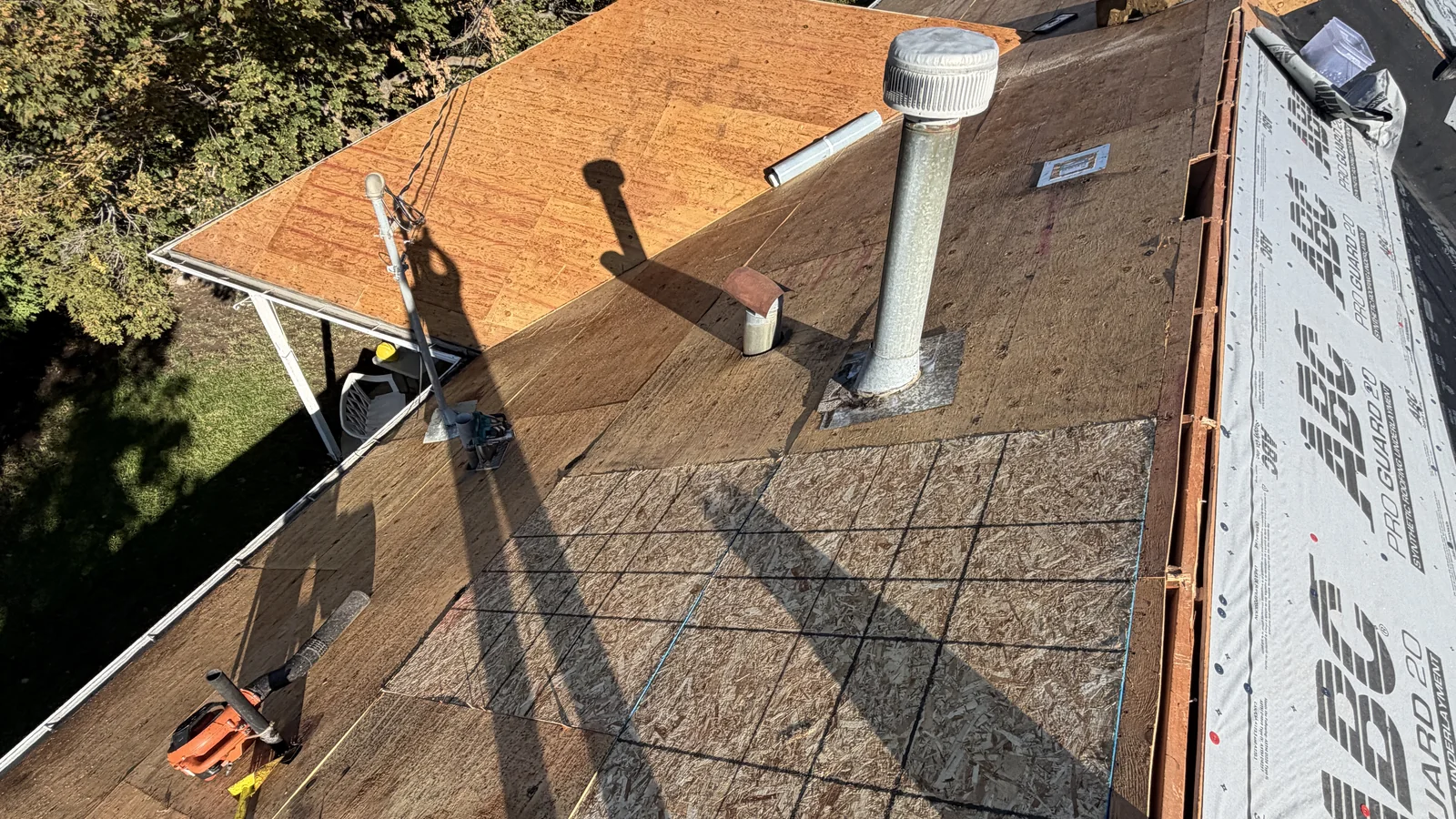
QUICK ANSWER: Salt Lake City Building Services says a permit is required for reroofing, and permits are typically issued within one to two days after application. The city's roofing guidance stresses ice barrier protection that extends from the eaves inward to guard against ice dams, limits roofing over two or more existing layers, and lists typical inspections for the deck, the ice barrier or underlayment, and the finished roof. Homes in a local historic district need a Certificate of Appropriateness first. Call Frame Restoration Utah at 435-292-8802 for a free inspection.
Do you need a permit to replace a roof in Salt Lake City?
Salt Lake City Building Services answers that question directly in its roofing code summary: "A permit is required." The same page notes that the scope of work and the jurisdiction decide the details, but for a homeowner inside city limits planning a tear-off and new roof, the practical answer is yes. Building Services handles permits, plan review and inspections, and its roofing guidance says permits are typically issued within one to two days after application, so the permit step rarely holds up a well-planned job.
The permit is not paperwork for its own sake. It is what triggers the inspections, and the inspections are the independent check that the parts of the roof you will never see again, such as the decking and the ice barrier, were installed the way the code requires. Before work starts, ask your roofer for the permit number and keep it with your contract. If a contractor suggests skipping the permit to save time, that is a reason to keep looking. Our roof replacement quote checklist covers what else belongs in the paperwork.
Which code applies to a Salt Lake City reroof
Roofing in Salt Lake City follows the Utah State Construction Code. The city's summary lists the Utah State Residential Code, based on the 2021 International Residential Code, as one of the primary roofing sources, and notes that these codes apply statewide while local jurisdictions may enforce additional amendments or requirements. Salt Lake City also enforces energy code standards that can affect roof insulation, ventilation and overall roofing assembly performance.
You do not need to read the code to hire well, but you should expect your estimate to reflect it. A good written scope names the underlayment, the ice barrier, the flashing and the ventilation plan rather than listing only shingles and labor. If an item is missing, ask how the contractor intends to meet the code for it. A clear answer usually means the crew has been through Salt Lake City inspections many times. A vague one is worth noting.
Why ice barrier matters on every Salt Lake City roof
Winter is the season when roofs along the Wasatch Front are tested hardest. Snow sits on the roof, attic heat melts the bottom layer, and the meltwater refreezes at the colder eaves. That ridge of ice is an ice dam, and water backing up behind it can work under shingles and into the roof deck, soffits and walls. Salt Lake City's roofing guidance addresses this directly: "Ice barriers are especially important in Utah climates and typically must extend from the eaves inward to protect against ice dam damage."
An ice barrier is a self-adhering membrane installed under the shingles along the eaves, and often in valleys and around penetrations. It seals around nails and holds back water that a normal underlayment would let through. Ask your contractor exactly where the ice barrier will go on your roof and how far up from the eaves it will run, and make sure that answer appears in writing. If your home already shows icicles and staining at the eaves each winter, our ice dam guide explains the causes and fixes.
Ventilation is part of ice dam prevention
Ice barrier stops water that gets past an ice dam, but ventilation helps keep the dam from forming. Salt Lake City's guidance states: "Roof and attic ventilation is required to reduce moisture buildup and prolong roof life." A well-vented attic stays closer to outdoor temperature, so less snow melts from below, and moisture from the house has a way out instead of condensing on the underside of the roof deck.
A reroof is the best moment to fix ventilation, because the deck is exposed and vents can be added or corrected without extra tear-out later. Ask your roofer to look at intake vents at the soffits, exhaust at or near the ridge, and anything blocking airflow, such as insulation packed against the roof deck. Our Utah roof ventilation guide goes deeper into the options.
Layer limits and when a tear-off is required
Some contractors offer to install new shingles over an existing roof. Salt Lake City's guidance says reroofing code generally restricts adding a new roof over existing layers in certain situations, including "When there are already two or more existing roof layers." The city also notes that reroofing is limited when multiple roof layers or damaged decking are present.
Even where an overlay is allowed, a full tear-off is usually the better choice here, because it lets the crew inspect and repair the deck and install a continuous ice barrier at the eaves. Ask how many layers your roof has now. If there are already two, plan on removing them. If there is one, ask the contractor to explain the tradeoffs in writing before you choose.
The inspections to expect, and historic district homes
The city's roofing summary lists typical inspections that may include a deck or sheathing inspection, an ice barrier or underlayment inspection, and a final roofing inspection. The order matters. The deck and ice barrier are inspected before they are covered, which is exactly why the permit protects you: those layers cannot be checked once the shingles are on. Ask your contractor to schedule inspections so the crew is not covering work before it passes, and keep a copy of the final result.
Many Salt Lake City homes sit in local historic districts. For those homes, the city states that "A Certificate of Appropriateness is required prior to permit issuance if the structure is located within a local historic district." Build that step into your schedule, especially if you are changing materials or colors. Our historic home reroofing guide covers what to expect.
How to plan a winter-ready reroof in Salt Lake City
Start with an inspection and a written scope that names the ice barrier, underlayment, ventilation and any decking repairs. Confirm the permit before tear-off, and ask for photos of the deck and the ice barrier before they are covered. If your home is in a historic district, get the Certificate of Appropriateness first. Frame Restoration Utah offers free, no-obligation roof inspections in Salt Lake City and across the Wasatch Front. Learn more about our roof replacement service or call 435-292-8802.
Frequently Asked Questions
Do I need a permit to replace my roof in Salt Lake City?
Yes. Salt Lake City Building Services states that a permit is required for roofing work, and its guidance says permits are typically issued within one to two days after application. The permit is what triggers the inspections of the deck, ice barrier and finished roof.
Does Salt Lake City require ice and water shield on a new roof?
The city's roofing guidance says ice barriers are especially important in Utah climates and typically must extend from the eaves inward to protect against ice dam damage. Ask your contractor where the ice barrier will be installed and get it in writing.
Can I put a new roof over my old shingles in Salt Lake City?
Reroofing over existing layers is restricted in certain situations, including when there are already two or more roof layers or the decking is damaged. A full tear-off also lets the crew inspect the deck and install a continuous ice barrier.
What inspections does a Salt Lake City roof replacement need?
The city lists typical inspections that may include a deck or sheathing inspection, an ice barrier or underlayment inspection, and a final roofing inspection. The deck and ice barrier are checked before they are covered.
Do historic homes in Salt Lake City need extra approval for a new roof?
Yes. A Certificate of Appropriateness is required before the permit is issued if the home is in a local historic district. Plan for that step before scheduling the work.
Sources & References
- Salt Lake City Building Services: Building Code for Roofing
- Salt Lake City Building Services
- International Code Council: International Residential Code
- National Weather Service Salt Lake City
Frame Restoration Utah serves homeowners across the Wasatch Front and Heber Valley with free post-storm and pre-purchase inspections. Call 435-292-8802 or schedule online. Every repair is backed by our 10-year workmanship warranty.