QUICK ANSWER: Orem roof replacement should account for valley-floor heat exposure, winter freeze-thaw, older 1955-1985 housing stock, and whether the home has layered shingles or attic-ventilation issues. The right reroof scope depends on neighborhood: Northridge custom homes may warrant Class 4 architectural or designer shake; older ranch homes near Center Street often need careful tear-off and deck review before material selection. Frame Restoration Utah is licensed, insured, BBB Accredited. Call 435-292-8802.
Why Orem Roofs Fatigue Faster than East-Bench Equivalents
Orem sits on the Utah Valley floor between roughly 4,500 and 4,700 feet, with most of the city's residential housing stock built between 1955 and 1985. That timing means a very large share of Orem homes are now on second-cycle reroof, with original 1980s 3-tab asphalt long replaced and the early-2000s architectural asphalt that succeeded it now approaching its own warranty cliff. The compounding factor is heat-island UV fatigue.
Pavement coverage along Orem's State Street, University Parkway, 800 East, and Geneva Road corridors creates heat-island pressure on roof surfaces. EPA guidance notes that developed areas can run warmer than surrounding areas because roofs, pavement, and other hard surfaces absorb and re-radiate heat. That additional thermal cycling can speed granule loss, sealant fatigue, and brittle-mat symptoms on south and west slopes.
The practical consequence is that the replace-vs-repair decision needs slope-by-slope evidence, not a quick ground glance. After a wind or hail event, older Orem roofs can show a mix of storm damage and age-related wear. Frame Restoration Utah documents roof facts — roof age indicators, slope orientation, ventilation, decking, flashing, and visible impact — so the homeowner can make the next decision with a clean construction record.
Material Choices for Heat-Island-Exposed Orem Homes
Standard 3-tab asphalt is not appropriate for Orem in 2026 — the warranty period (15-20 years) is shorter than the practical service life under heat-island UV fatigue, and the wind-uplift rating (60 mph) is below typical Utah Valley wind events. We do not install 3-tab on Orem homes. The baseline minimum is 30-year architectural asphalt with a 110+ mph wind warranty.
Class 4 impact-resistant shingles are a strong mid-tier option for many Orem homes because the added impact rating can matter in Utah hail and wind seasons. Product lines such as CertainTeed NorthGate and GAF Timberline AS II are reviewed against slope, budget, color, ventilation, and manufacturer requirements. Any carrier credit should be confirmed directly with the homeowner's carrier before it is treated as part of the budget.
Cool-roof shingles (lighter color palettes that reflect more solar radiation) are worth considering for Orem homes specifically because of the heat-island concern. They are not automatically the right choice for every house: color restrictions, neighborhood aesthetics, attic ventilation, snow-shed behavior, and warranty requirements all matter. See full reroof material specs and pricing.
Neighborhood-Specific Reroof Considerations
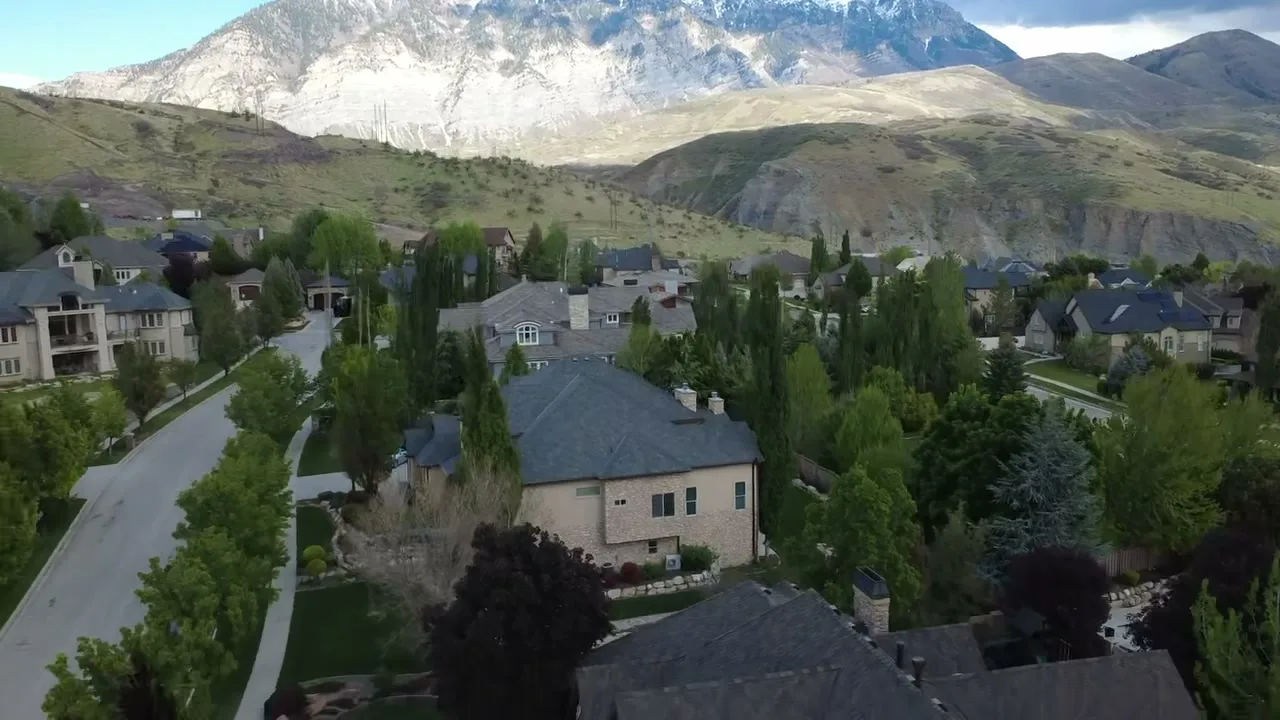
Northridge and the homes along the city's eastern edge near Mt Timpanogos pick up some elevation and tree canopy that mitigates the heat-island effect. These neighborhoods skew newer (1985-2005 construction) with steeper-pitch two-stories and custom builds. Most Northridge homes are at first-cycle reroof now. Class 4 architectural is the right baseline; some Northridge HOA pockets carry CC&Rs requiring Class A 30-year-warranty materials.
The Center Street corridor and the older neighborhoods between State Street and 800 East represent Orem's original 1955-75 housing stock — predominantly mid-pitch ranchers and split-levels on simple roof geometry. Most are on second-cycle reroof now. Watch for original galvanized flashing and pipe boots that need replacement on any reroof, and budget for occasional layered shingle assemblies (asphalt over original wood shake on pre-1975 homes) that need full tear-off and deck inspection.
Cherry Hill and the southwest Orem corridor along Sandhill Road carry higher heat exposure than shaded neighborhoods because of pavement, commercial corridors, and more open roof planes. We typically compare Class 4 and lighter architectural color palettes on these homes. Document granule loss carefully on south and west planes; that is one of the clearest indicators of cumulative UV and weathering.
The Geneva Road industrial corridor mainly affects commercial and light-industrial properties rather than residential reroofs, but homes along the corridor's residential edges face the same heat-island compounding plus occasional metal-debris exposure during high-wind events. Storm-response inspections in this corridor should look for unusual impact patterns that don't match a typical hail-only profile.
What an Orem Reroof Actually Costs
Orem reroof pricing reflects the city's predominantly mid-tier housing stock and limited HOA constraint. Basic ranges for a typical 30-square home in 2026 dollars: standard 30-year architectural asphalt runs roughly $11,000 to $17,000; Class 4 impact-resistant architectural runs $13,000 to $20,000; cool-roof Class 4 runs $14,000 to $21,000; designer shake (synthetic) runs $22,000 to $38,000; standing-seam metal runs $28,000 to $52,000.
Most Orem reroofs land in the $13,000 to $19,000 range with Class 4 upgrade since that matches the dominant housing stock and demographic. Older Center Street corridor homes with multi-layer tear-offs typically run 10 to 18 percent above the base range due to additional tear-off labor and likely deck-replacement scope. Northridge custom-home reroofs with specialty materials reach the upper end. We provide written, line-item estimates after an on-site inspection.
Financing is available for qualified homeowners through standard third-party lenders. If storm damage is part of the discussion, our role is to document roof conditions and construction scope so the homeowner has clear facts for any carrier review. See our storm-damage documentation process.
The Frame Restoration Utah Reroof Process
Every reroof starts with a free, no-obligation on-site inspection. Our crew documents the existing roof condition with annotated photos, measures every plane, identifies decking issues that may need replacement, and provides a written estimate within 24 to 48 hours. We work to current International Residential Code (IRC R905) standards and Utah DOPL contractor licensing requirements. Every reroof includes our 10-year workmanship warranty plus the manufacturer's material warranty.
On install day we tear off to the deck, inspect every sheet for rot or delamination, install ice-and-water shield to local code, install synthetic underlayment, install drip edge and starter strip, install the finished roofing material, install ridge venting and ridge cap, replace all pipe boots and step flashing. Standard crew completes a 30-square asphalt reroof in 1 to 2 days; specialty-material reroofs run 4 to 7 days. Verify our Utah DOPL license and BBB accreditation.
Throughout the project we coordinate with your HOA architectural review board where applicable, the Orem building-permit process, and any homeowner-requested construction documentation. Most Orem reroofs do not have HOA constraints, which simplifies the project cycle compared to Highland or Daybreak.
Orem evidence checks before we recommend replacement
Our Orem roof-replacement recommendation is based on six evidence checks: documented roof age, number of existing layers, attic ventilation path, south- and west-slope granule loss, visible flashing condition, and whether Orem permitting is required for the scope. Orem's own permit guidance lists reroofing and structural-component work as permit-triggering items, while IRC R806.2 and R905.1.2 give the ventilation and ice-barrier details we verify during the estimate.
For a typical 30-square Orem reroof we also separate base roofing from variables that materially change scope: 2 to 6 sheets of decking on older layered tear-offs, pipe-boot replacement, chimney or wall flashing, ridge-vent correction, and any HOA color review. That makes the proposal easier to compare and keeps the homeowner from making a major decision off a single blended price.
Frequently Asked Questions
Why do Orem roofs need earlier inspection than shaded east-bench roofs?
Orem's valley-floor neighborhoods combine summer UV, pavement heat, winter freeze-thaw cycling, and older mid-century housing stock. That does not mean every Orem roof fails early, but it does mean south and west slopes, brittle mats, attic ventilation, and granule loss deserve close review before a repair-versus-replacement decision.
Should I install cool-roof shingles on my Orem home?
Worth considering, especially in heat-exposed neighborhoods like Cherry Hill or along the Geneva Road corridor. Cool-roof color palettes can reduce solar heat load compared with darker options. We compare color, ventilation, shingle rating, HOA requirements, and budget before treating a cool-roof option as the right fit.
What about Class 4 shingles for Orem homes?
Class 4 impact-resistant shingles are worth reviewing in Utah hail and wind markets, but policy credits are carrier-specific and not guaranteed. Frame Restoration Utah compares product rating, roof slope, ventilation, cost, and any carrier documentation the homeowner wants to review before recommending the upgrade.
My Orem home is from 1968 with multiple shingle layers — what's the reroof scope?
Standard scope for older Center Street and central-Orem homes. Asphalt over original wood shake is common in pre-1975 housing. The reroof needs full tear-off to the deck (one layer at a time), full deck inspection for rot and delamination, and likely replacement of original galvanized flashing and pipe boots. Budget 2 to 6 sheets of decking replacement on most multi-layer tear-offs. Total cost typically runs 10 to 18 percent above single-layer scope.
How long does a roof replacement take in Orem?
Standard 30-square architectural-asphalt reroofs install in 1 to 2 days. Multi-layer tear-offs on older central-Orem homes add half a day. Specialty-material reroofs (designer shake, standing-seam) on Northridge custom homes run 4 to 7 days. Orem City building department permit processing typically runs 5 to 10 business days. Most Orem reroofs do not have HOA review constraints, which keeps the project cycle shorter than Highland or Daybreak — typical 2 to 3 weeks scope-lock to final inspection.
Sources & References
- Orem City — Building Permits
- Orem City — When Do I Need a Building Permit?
- IRC R806.2 — Roof Ventilation
- IRC R905.1.2 — Ice Barriers
- GAF — Class 4 Impact-Resistant Shingles
- Utah Division of Professional Licensing (DOPL)
- EPA Heat Island Effect
Frame Restoration Utah serves homeowners across the Wasatch Front and Heber Valley with free post-storm and pre-purchase inspections. Call 435-292-8802 or schedule online. Every repair is backed by our 10-year workmanship warranty.