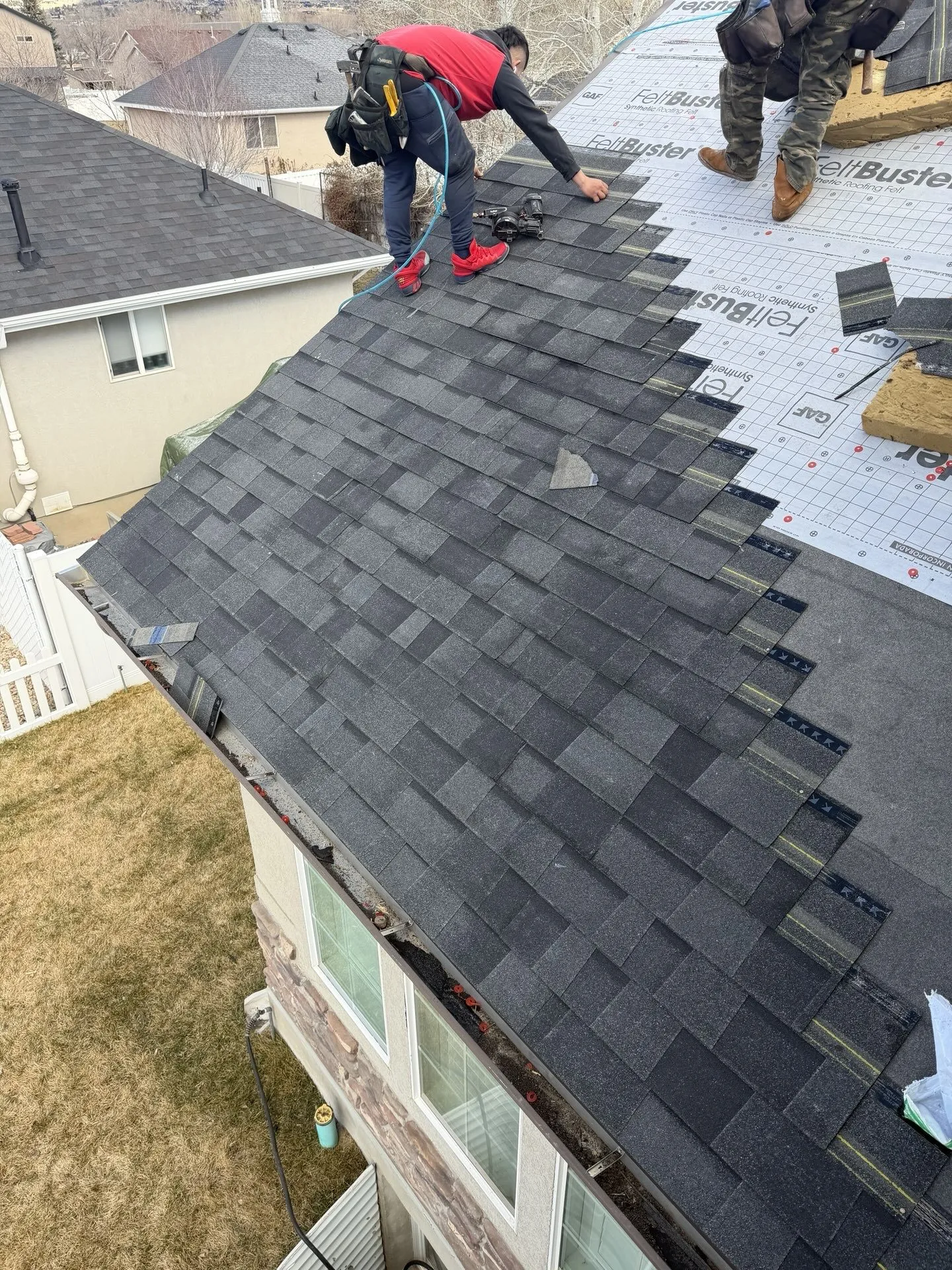
QUICK ANSWER: Snow load matters in Heber City because the roof has to carry what the ground snow load number says it should, and that number is not a guess a roofer makes on the day. Utah State University's map predicts ground snow load from elevation, and an engineer or the building official decides what applies to your specific site. Ask about it any time decking or framing changes. Frame Restoration Utah offers free, no-obligation inspections at 435-292-8802.
Why Snow Load Matters When Replacing a Roof in Heber City, and Who Decides the Number
Here is the direct answer to the question most Heber City homeowners never think to ask until a roofer mentions it. Snow load matters because a roof is not only a waterproof skin. It is also part of a structure that has to carry weight, and in a high mountain valley the weight that arrives every winter is snow. When you replace a roof, you are opening up the one part of the house that was designed around that weight. That is the moment to confirm that what goes back on is compatible with what the structure was designed to carry.
As for who decides the number: it is not the homeowner and it is not a salesperson with a clipboard. Utah State University publishes a statewide Utah Snow Load resource, and it explains that its predictions are calculated using an adaptation of PRISM, which it describes as a weighted linear regression model that uses elevation to calculate ground snow load at a local level. That gives a starting point for any address. The number that actually applies to a specific site is then decided by an engineer or by the building official who reviews the work.
If your project is a straight tear-off and re-cover on sound decking, the snow load conversation may be short. If the decking or framing will change in any way, ask about snow load out loud and expect a real answer from someone qualified to give it.
What Ground Snow Load Actually Means
Ground snow load is a design value. It describes the weight of snow that a site should be expected to see on the ground, and it is the starting point engineers use when they work out what a roof structure has to carry. It is a planning number rather than a forecast. It does not tell you how much snow will fall next week, and it does not change because one winter looked different from the last. It exists so that buildings are designed around a consistent, defensible figure instead of a feeling.
Homeowners often confuse snow load with snowfall. Snowfall is weather that changes every winter. Snow load is a design value that feeds into rafters, trusses, decking and connections. This post deliberately quotes no numbers, because the right figure for your property comes from the people authorized to determine it.
It also helps to know what snow load is not. It is not a shingle rating, and it is not a product warranty. A shingle can be a perfectly good product and still sit on a roof structure that was never reviewed for the load it carries. That is why a good roof replacement conversation separates the covering, which is what most people shop for, from the structure underneath, which is what the snow load number is really about.
How Utah State University's Map Predicts Snow Load From Elevation
The Utah Snow Load site run by Utah State University is the resource to know. Its own description says the predictions are calculated using an adaptation of PRISM, a weighted linear regression model that uses elevation to calculate ground snow load at a local level. In plain language, the map takes how high a location sits above sea level and uses that relationship to estimate the ground snow load there. Elevation is the driver.
That is what makes Utah different from places with flat, uniform snow country. Here, two addresses that are close together on a road map can sit at very different heights, and a model that is driven by elevation can reflect that. For a homeowner, the lesson is that you cannot borrow a number from a friend across the state, or even assume that a rule of thumb from another valley applies. The elevation of the site is what the model is built on, so the site is what matters.
Local building rules point to the same tool. Heber City is the county seat of Wasatch County, and Wasatch County's building design criteria, effective July 1, 2023, say the ground snow load is to be determined using the Utah State University calculator. If your home is inside Heber City limits, confirm with Heber City's building department which criteria apply to your address. Either way, the USU number is a reasoned starting point for an engineer or building official, not a substitute for the person who decides what applies to the house in front of them.
Why Heber City's Place High in the Heber Valley Changes the Conversation
Heber City sits high in the Heber Valley, and because the USU model uses elevation to predict ground snow load, that height is why snow load belongs in every Heber City roof replacement conversation. We will not give you a figure for Heber City, because it depends on the site and on who is authorized to decide it. Asking early, before the old decking is off and the schedule is set, almost always makes for a smoother project.
Where Engineering Judgment Enters: When the Site Doesn't Match the Map
The USU resource includes a sentence every homeowner should read. It states that engineering judgement must be exercised where the predicted elevation greatly differs from the actual elevation at the site. That is the map itself telling you that it is a prediction and that it has limits. When the elevation the model assumes is meaningfully different from the real elevation of the lot, a person with the training to judge it has to step in.
In a valley, that matters. A house on a rise, along a bench or at the edge of the valley floor may not sit at the elevation the model assumed for that spot. Where the two greatly differ, the source says engineering judgement is required.
This is the clearest reason the decision should not be made by a roofer alone. A roofer can observe the roof and the decking. A roofer cannot responsibly replace the judgment of an engineer or the authority of the building official. At Frame Restoration Utah we would rather tell you that a question needs an engineer than guess at an answer and put your home at risk. Our job is to document what we see on the roof, and to do the roofing work to a recognized standard.
When Decking or Framing Changes, Ask About Snow Load
If you take only one habit from this post, make it this one: whenever decking or framing changes, ask about snow load. A tear-off often reveals what the old roof was hiding. Decking may be damaged, uneven or in need of replacement. Framing may need repair. The moment those parts of the structure are altered, you are no longer simply swapping a covering. You are touching the part of the roof that carries load, and the question of what snow load applies is fair to raise.
The questions are straightforward. Is the decking staying as it is or being replaced? Is any framing being repaired, added or modified? Has anyone confirmed with the building official whether a permit or review applies to this scope? Has an engineer been asked about the site if the situation calls for it? You do not need to know the answers in advance. You only need to be willing to ask, and to expect a clear reply from your contractor.
If you are weighing the bigger picture, our page on full roof replacement services explains how we approach a complete tear-off, and our page on residential roofing covers the range of work we do on homes. Neither page replaces the engineering question. They simply describe how we carry out the roofing work once the structure and the requirements are clear.
What a Roof Replacement With Frame Restoration Utah Looks Like
Frame Restoration Utah is Licensed & Insured in Utah, BBB Accredited, and works under a Utah DOPL contractor license. We perform roofing work to IRC R905 standards, we back our workmanship with a 10-year workmanship warranty, and we offer free, no-obligation inspections. You can read more about who we are on our About page, and you can verify any Utah contractor's license for yourself through the Utah Division of Professional Licensing.
On a replacement we start with the roof as it actually exists. We look at the surface, the decking where it can be seen, the flashing and the details, and we write down what we find. If something suggests the structure needs a closer look, we say so and recommend that the right professional be consulted. We would rather slow a project down for a good reason than rush it and leave you with questions later.
If you are also thinking about coverage, here is how we handle that. Frame Restoration Utah documents the observed roof conditions and prepares a written scope your carrier can review. The carrier determines coverage. We document, we don't adjust — regulated adjusting work stays with properly authorized professionals. You file with your insurer, and our written documentation is there to support the conversation you have with them. If storm damage is your concern, our page on storm damage repair explains how we respond, including our 24/7 storm response.
Questions to Ask Any Roofer Before You Sign in Heber City
Before you sign anything, ask whether the contractor holds a Utah contractor license and whether they carry insurance. Ask who is responsible for confirming what applies to the site when decking or framing changes. Ask whether the work follows a recognized standard such as IRC R905, and ask what the workmanship warranty covers and for how long. A contractor who is confident in their process will answer these without hesitation.
Then ask the snow load question itself, in your own words. Something like: given that Heber City sits high in the Heber Valley, who confirms the snow load that applies to my house, and what happens if my decking or framing needs to change? The best answer names an engineer or the building official as the decision-makers, not a guess. If a roofer waves the question away, that tells you something useful about how they work.
Finally, keep your own records. Photograph the roof before work begins, keep your written scope and any correspondence, and keep a copy of any documentation about the decking or framing. Good records protect you whether you are talking to your carrier, to the building official, or to a future buyer. If you would like a free, no-obligation inspection and a straight conversation about your roof, call Frame Restoration Utah at 435-292-8802.
Frequently Asked Questions
What is ground snow load, and is it the same as how much snow Heber City gets?
No. Ground snow load is a design value used to plan what a roof structure must carry, while snowfall is weather that varies from year to year. Utah State University's Utah Snow Load resource predicts ground snow load using a model that relies on elevation. It is a planning number, not a forecast.
Who decides the snow load that applies to my specific Heber City house?
An engineer or the building official decides what applies to a specific site. Wasatch County's building design criteria point to the USU calculator for ground snow load, and if your home is inside Heber City limits, confirm the criteria with Heber City's building department. Frame Restoration Utah is a roofing contractor, so we point snow load questions to those authorized to answer them.
Why does Heber City's elevation matter for my roof replacement?
The USU model uses elevation to calculate ground snow load at a local level, and Heber City sits high in the Heber Valley. That makes snow load a sensible question for homeowners here. We do not quote a number, because the figure that applies depends on your site.
When should I specifically ask my roofer about snow load?
Ask whenever decking or framing is going to change, such as replacing damaged decking or repairing framing found during tear-off. At that point the work touches the part of the roof that carries load. Ask who confirms the requirement and whether the building official needs to be involved.
What if the map's elevation doesn't match my property's actual elevation?
The USU resource says engineering judgement must be exercised where the predicted elevation greatly differs from the actual elevation at the site. In that situation, an engineer should weigh in. If you think your lot may be different from the map, raise it before the roof work starts. You can reach Frame Restoration Utah at 435-292-8802 to talk through your roof.
Sources & References
- Utah State University — Utah Snow Load
- Wasatch County building design criteria
- Utah Division of Professional Licensing (DOPL)
- International Code Council — International Residential Code (IRC)
- Heber City Corporation
- Utah Insurance Department
Frame Restoration Utah serves homeowners across the Wasatch Front and Heber Valley with free post-storm and pre-purchase inspections. Call 435-292-8802 or schedule online. Every repair is backed by our 10-year workmanship warranty.