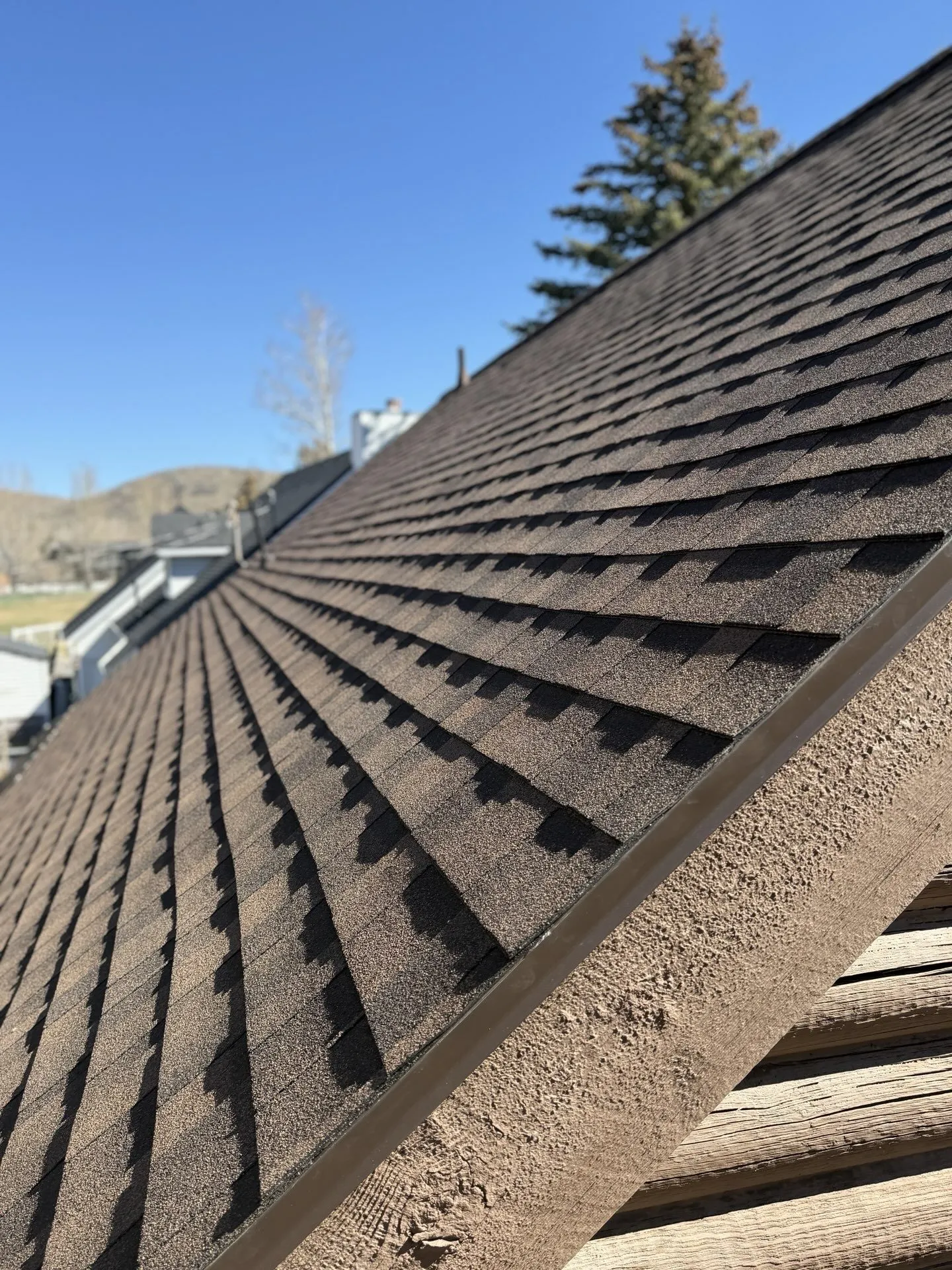
Your next step: After hail at your Charleston property, document the house and any separate garage or outbuilding individually. Stay on the ground, label photos by building, and report active water entry when requesting help. Frame Restoration Utah in Heber City can discuss a roof inspection, the structures involved, and current appointment availability.
A clear record starts with the right building
We prepared this Charleston checklist following a local report of hail. It is not a field inspection report, a weather-service confirmation, or a diagnosis of your property. The purpose is to help you gather useful observations before discussing roofing work.
When a property has more than one roof, a single message saying “the roof was hit” can leave important questions unanswered. Is the concern above a bedroom, over an attached garage, or on a separate structure? Are you seeing water indoors, fallen pieces outside, or marks whose age is unknown? A building-by-building description helps organize the next conversation.
This checklist is for Charleston homeowners after hail. It does not assume that every home has an outbuilding, or that every structure at one address has the same condition. Charleston’s official town history describes its farming and ranching roots. For a property with several structures today, describe only the buildings you actually want assessed; that history is not evidence of current storm damage.
1. Separate urgent concerns from observations
If water is entering the home, call and explain its location instead of waiting for someone to interpret a photo album. Mention whether the issue affects an occupied room. Stay clear of wet electrical equipment, unstable ceilings, damaged structures, and loose material. An immediate threat to safety calls for emergency services, not a routine inspection request.
Do not walk onto a roof to see what happened. The National Weather Service recommends shelter and continued attention to weather warnings during severe thunderstorms. Keep people and pets away from broken glass or fallen material once you can safely observe the property. Avoid any area where the route itself is unsafe.
Not every observation has the same meaning. A mark on an accessible downspout is something to record, not proof that shingles above it failed. Roofing pieces on the ground deserve a description, but their original location may be uncertain. A dry living room also does not establish the condition of a detached garage you have not entered.
2. Make a simple Charleston property inventory
Write down the structures relevant to your request using familiar names. You do not need technical roof measurements to start. If you do not know the material, say that rather than selecting a label because it resembles a photo online. The team can discuss the inspection scope and whether each structure is a fit before booking.
- Main house: Describe the room below any concern and the exterior side visible from the ground.
- Attached garage: Note whether it shares a roof section with the house or whether that is unknown.
- Detached garage or workshop: Identify it separately and say whether the interior has been checked safely.
- Other structures: List only those you want discussed. Do not assume they are included in an inspection or estimate for the home.
- Access: Explain locked areas, occupants, animals, or equipment that the team should coordinate around.
An accurate street address matters more than a nearby landmark. Say that the property is in Charleston when contacting the Heber City team, then provide the address privately. Directions, access limitations, and the correct structure help avoid misunderstandings; they do not reserve a visit or establish an arrival time.
3. Photograph a sequence, not just a close-up
Start with a wide view that identifies the building. Follow with an accessible detail from a safe position. Give each image a short label, such as “house, north side” or “detached garage, interior corner.” If you are unsure of the direction, use a plain description like “side facing the driveway” rather than inventing compass accuracy.
Keep a note of when you first noticed the condition and whether you have an older photo for comparison. Preserve the originals, including useful capture information. Do not crop away the context from your only copy. A photograph of hail may help explain why you are concerned, but it is not a measurement of your roof’s damage.
When texting images, identify which building they show and ask for receipt confirmation. Avoid sending personal documents or gate codes to public pages. If several family members collected pictures, combine their observations without changing “possibly new” into “caused by hail.” The uncertainty is part of an honest record, not a weakness to remove.
4. Discuss each material and roof area on its own merits
Weather labels and building assessments answer different questions. In its severe-thunderstorm guidance, the National Weather Service lists hail of 1.0 inches or larger as one criterion. A storm meeting that threshold does not establish the condition of the house, garage, or any other roof. No measured hail size is being reported for your Charleston address here.
A house and a garage may use different roofing products, have different ages, or show different conditions. Even when they look alike from the driveway, do not assume an observation on one settles the repair needs of the other. Ask which surfaces the inspector assessed and which were outside the agreed scope.
For any recommended repair, request a plain-language explanation of the condition, its location, and the proposed response. Ask whether photographs show the specific area discussed. If an area was inaccessible, have that limitation recorded rather than treating an incomplete inspection as a finding that everything is sound.
Questions about repair versus replacement should follow the findings. You can ask why a localized repair is or is not appropriate, what material is proposed, and how the work relates to the rest of that building. There is no roof replacement requirement established by this article, and visible marks alone do not set a price.
5. Compare estimates building by building
When evaluating proposals, look for clear scope labels. An estimate that says “garage roof” is difficult to compare with one that includes the house, garage, and cleanup without separating them. Ask each provider to identify included structures, roof areas, preparation, materials, disposal, exclusions, and any follow-up work that requires a separate decision.
Before signing, clarify who will authorize changes if an additional condition is discovered. Discuss how findings will be documented and how you will receive a revised proposal. Keep your unanswered questions in writing. Do not interpret a brief conversation as agreement to work on every roof at the property.
Your insurer can explain your policy’s documentation requirements and applicable deadlines. A roofing estimate addresses proposed construction work, not a promise of coverage or payment. Keep those conversations distinct and retain the documents you receive from each party.
6. Send a focused inspection request
Charleston is in the southwest Heber Valley; the town’s 2022 draft annexation plan places it about 5 miles from Heber City. That is geographic context, not a drive-time or response promise. Our team coordinates your request through Heber City, so provide the property address and identify Charleston rather than relying on a general valley description.
A useful first message could read: “I am in Charleston, Utah. I noticed a new stain in the attached garage after hail. The house interior looks unchanged from what I can safely see. I would like an inspection and can provide photos.” Use only details you know. If the interior is unchecked, say so explicitly.
Tell the team the best way to reach you, whether anyone must be present, and which buildings you want to discuss. Ask if the proposed inspection can cover those structures and what access is needed. Frame offers free roof inspections, but a request must be reviewed and an appointment confirmed; this page promises neither immediate dispatch nor a particular scope for an unassessed outbuilding.
After the conversation, save one summary with the date, contact, requested scope, agreed next step, and outstanding questions. If symptoms change, update that record and tell the team. Clear communication is more useful than repeatedly forwarding an unlabeled neighborhood photo.
For service details, see our Heber City roofing page, roof repair information, and storm-damage services. Charleston requests go to the Heber City business; no separate Charleston office is advertised here.
Talk through your Charleston roof concern
Request a free inspection. Explain any active leak and confirm the visit with our team.
Charleston hail inspection questions
Should I include a detached garage in my Charleston inspection request?
List it separately and describe your concern. Ask the team whether that structure can be included before assuming a house inspection or estimate covers it.
Can one damaged roof mean every building needs replacement?
No. Each structure and roof area needs its own assessment. Different materials, conditions, and inspection limitations should be explained separately.
What if I cannot identify my roofing material?
Say that the material is unknown. You can describe the building and send safe ground-level photographs without climbing or guessing a product name.
How should I label photos from several buildings?
Use the building name, the side or room, and when you noticed the condition. Keep original files and distinguish a new observation from an older or uncertain mark.
Does Frame have a Charleston office?
Charleston requests are handled through Frame Restoration Utah in Heber City. This article does not advertise a separate local office or an emergency arrival promise.
How can I ask about a free roof inspection?
Call or text 435-292-8802 or use the website contact form. Provide your Charleston location, describe any active leak, and confirm the inspection scope and appointment with the team.
Related Heber Valley homeowner guides
For a property elsewhere, read the Midway hail inspection guide or the Hideout homeowner checklist. Each guide is practical preparation, not a map of confirmed storm damage.